|
|
What is this
"frequency-hopping"?
Frequency-hopping, spread spectrum (FHSS) radio is the method by which we
move our GENERALCOMMUNICAIONS.COM radio control signals from transmitter
to receiver. The other two types of radios available on the market today
are fixed frequency and direct sequence. Fixed-frequency radios require
a government-issued license in order to operate and have a fixed
bandwidth in which to send their signals. Direct sequence spread
spectrum (DSSS) radios do not need a license and are allowed to operate
in the ISM band (DSSS are typically used for moving data files - please
refer to our Spread Spectrum tutorial white paper). Frequency-hop ping
radios are also license free and GENERALCOMMUNICAIONS.COM has designed
ours to handle smaller amounts of data, but reliably in very high
interference environments. FHSS radios "hop" around all the different
frequencies available to them in the ISM frequency band and transmit
small amounts of data repeatedly. By changing frequencies every 20
milliseconds, the GeneralCommunications.com FHSS radios avoid most
interference that may be present within its frequency band, and by
sending data over and over again, gets the data through, even if some
packets may have been lost to interference.
Can I use
more than 1 radio control in the same area?
Yes please.
Our frequency-hopping technology ensures that many
GENERALCOMMUNICAIONS.COM radios can co-exist without interfering with
each other. If we have a bunch of FHSS radios operating in the same
area, the signals will invariably "bump" into each other, but the random
manner in which they "hop" around the frequency band never allows them
to interfere with each other long enough to interrupt the signal.
What about
the receivers? How many types are there? How do I know which one to get?
Depending on
the transmitter you choose, you may have the option of one or more
different receivers, all roughly the size of an encyclopedia and
weighing no more than 7 pounds. They are all shock-mounted with a NEMA
4X environmental enclosure rating and have external BNC antenna
connections. All are designed to operate at 900MHz. Here are a few of
GENERALCOMMUNICAIONS.COM's receiver options:
FHSS has turned out to be more reliable in industrial applications for
some practical reasons, and here are two of them.
First, FHSS industrial modems typically enable the user to choose from a
large number of data channels (e.g. 150 or more), and within each data
channel the modem will hop between a large number of frequency channels
(e.g. 75 or more in the US). With this flexibility, FHSS modems can be
programmed to hop around virtually any electrical interference or
interfering object(s), and antenna diversity (see Dual Antenna) also
helps in that process. For example, if transmission is blocked at one
frequency, then the modem will automatically hop to the next frequency
in the pattern, so reliable communication is maintained. Second, FHSS
modems remain synchronized at all times, so their latency can be very
low, and short latency data transmission is often required in industrial
control applications.
Spread Spectrum is a coding technique for digital radio transmission and
was originally developed for the military. The purpose of coding is to
turn the information signal into a frequency that would resemble
something more like noise. Noise has a flat consistent spectrum without
consistent peaks and can be reduced or eliminated by filtering methods.
The spread spectrum coding technique modifies the signal spectrum to
spread it out over several frequencies whereby increasing its bandwidth.
Spread Spectrum technology actually "spreads" a transmitted radio signal
out over a wide frequency band. The Spread Spectrum receiver does not
detect the narrow band signals because it is designed to listen to a
wider bandwidth at a code sequence generated by transmitting algorithms.
Direct sequence spread spectrum systems modulate a narrow band carrier by
a code sequence used to change the carrier phase of the transmitted
signal. The speed of this code sequence is measured in "chips" per
second and referred to as the chipping rate. The spreading of a direct
sequence signal is a function of the chips per bit and the information
transmitted by a spread spectrum radio using this method is recovered by
multiplying the received signal with a copy of the code sequence.
In Frequency Hopping Spread Spectrum systems, the carrier frequency of the
transmitted signal changes in accordance with the pseudo-random code
sequence. A pre-determined algorithm is utilized to maintain the
synchronization between radios as they hop sequentially through a set
pattern of frequencies determined by the algorithm.
Spread spectrum technology offers advantages where data communications
reliability and integrity are important. The ability to share the same
frequency band with other users and dramatically enhanced data security
represents additional benefits. Sequence codes generated provide a
decrease in crossover connection properties enabling individual groups
of transceivers to operate side by side without interfering with other
units. Multiple signals can be transmitted at the same time on the same
frequency.
Some of the most important attributes of spread spectrum technology are:
-
Secure data
communications
-
Military
influenced Anti-jamming capabilities
-
Outside
interference rejection
-
Multiple access
capability
-
Multi-channel
interference protection
-
Low probability
of intercept
Frequency Hopping Spread Spectrum: In general, modern industrial wireless
modems utilize frequency hopping spread spectrum (FHSS) technology
rather than direct sequence spread spectrum (DSSS) technology. |
GeneralCommunications.com
We provide:
What is this
"frequency-hopping"?, industrial wireless controls,
industrial radio control, industrial controls wireless, industrial radio
control, industrial radio remote control, industrial wireless control, remote
controls, belly box transmitter, wireless remote control, wireless controls,
radio controls, radio remote controls, crane control, remote crane control,
crane remote control, monorail remote control, overhead crane control, concrete
pump control, conveyor remote control, conveyor control, remote winch control,
wireless winch control, remote boom control, belly box transmitter, remote relay
control, relay remote control
GeneralCommunications.com has
a Solution for every application. Contact Us at
sales@generalcommunications.com
Visual Signaling, Wireless.
Point to Point or Point to Multipoint monitor and control level,
flow, pressure, temperature, alarms, etc., while eliminating costs
for cable, conduit, trenching and boring.
We help you Communicate and
Move your Data point to Point multipoint
OkSolar.com Affiliate

Automation signaling works
best when you partner with an experienced source, one with a track
record of product innovation and technical leadership. GC signals come
with innovative features that meet all your signaling applications
needs. From simple horns and bells to demanding factory automation
signaling utilizing your PLC or Devicenet network, wireless, powered by
Solar and Fuel Cells, GC provides complete factory solutions. Find out
what makes signaling sense to you!
Applications
include: Products for material handling applications like
Underground Mining, Processing & Airport Transportation industries,
Military Applications, Whether your application requires SPEED
MONITORING,
REMOTE CONTROLS,
Security environments we can OEM at your specs, Remote areas Control
and Visualization.
Visual and Airport Suppliers Find Runway lights, runway lighting,
Runway End Identifier Lights, Heliport Lighting/Navigational Aids,
and Obstruction Lights, Transportation, Airports, Operations and
Maintenance, Supplies and Equipment. Signal Solutions for
industrial, commercial, institutional and security applications.
Everything you need to satisfy your customer for OSHA, ADA or
Process control signal requirements. |
|
Wireless RF
sensors
Temperature, Counters, Vibration,
ID, Pressure, and More...
With an emphasis on modularity
and compatibility, The GCS Family is ideally suited for a broad
range of applications from basic telemetry to custom engineered
wireless networking solutions.
A complete family of wireless RF sensors, transmitters, loggers,
repeaters, receivers and servers spanning the
418MHz. to 2.4GHz frequency range. With an
emphasis on modularity and compatibility,
The Point Family is ideally suited for a broad
range of
applications from basic telemetry to custom
engineered wireless
networking solutions
More info |
|
GeneralCommunications
Communicating - Alerting - Warning!
Audible signaling, Visual Signaling, Wireless.
Portable Radio Remote Controls: A signal for every signal need.
Radio Remote Control for cranes, locomotives, material handling
equipment, mining machinery, mobile equipment, shiploaders,
agricultural machinery, and virtually any equipment where the
operator can be moved to a safer, more efficient location signals
that can be both seen and heard.

Automation signaling works best when you partner with an experienced
source, one with a track record of product innovation and technical
leadership. GC signals come with innovative features that meet all
your signaling applications needs. From simple horns and bells to
demanding factory automation signaling utilizing your PLC or
Device net network, wireless, powered by Solar and Fuel Cells, GC
provides complete factory solutions. Find out what makes signaling
sense to you!
Remote Controls
Applications include: Products for material handling applications
like Underground Mining, Processing &
Airport Transportation industries, Military Applications, Whether your application requires
SPEED MONITORING, REMOTE CONTROLS, Security environments we can OEM
at your specs, Remote areas Control and Visualization. Visual and
Airport Suppliers Find Runway lights,
runway lighting, Runway End
Identifier Lights, Heliport Lighting/Navigational Aids, and
Obstruction Lights, Transportation, Airports, Operations and
Maintenance, Supplies and Equipment. Signal Solutions for
industrial, commercial, institutional and security applications.
Everything you need to satisfy your customer for OSHA, ADA or
Process control signal requirements |
|
|
SCADA Supervisory Control And Data Acquisition. SCADA may
be called Human-Machine Interface (HMI) in Europe.
RF Wireless Solutions, RF, Wireless Data Collection,
Industrial RF solutions, SCADA, wireless SCADA, RF SCADA monitoring,
wireless transceivers
Data from and control signals to pipes, valves and
pumps can be sent wirelessly via our products.
Electric utilities worldwide can use wireless solutions for
monitoring and controlling vital processes in the development and
distribution of electricity including data from substations,
capacitor banks and high tension lines.
Use wireless to link various segments of their infrastructure, and
to monitor and control alarms and sensors.
contact US Today! |
Visual
    
Remote and Securely we help you
Control your
Obstruction Lighting, Heliport Lighting, Airfield Lighting
 |
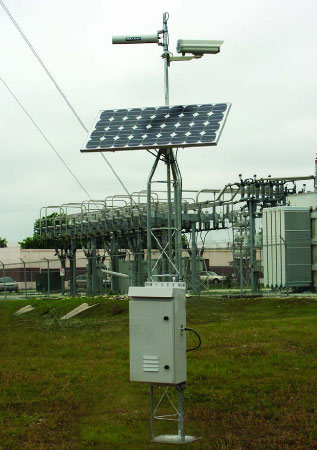
IP Video Anywhere
Solar-Powered Wireless
Camera
Got facilities you need to keep an eye on? Oftentimes they're
several miles from your headquarters and, worse, you can't get any
electricity (let alone Ethernet) to an exterior location where you'd
like to mount a camera. Companies with remote or hard to access
assets, such as oil and gas pipelines, bridges or rural properties,
have not had an effective, economical solution for protecting those
assets.
iPhone
Remote Control for Video IP Any Where! |
XStream Family Flexibility
Smaller than a credit card, the XStream Family™
of Wireless OEM Modules is designed around a
single form factor that allows
interchangeability
between 9XStream (900 MHz) and 24XStream (2.4
GHz) modules. This unique feature allows OEMs
the flexibility to develop domestic and
international products with identical layouts.
Simply plug in a 900 MHz module for shipment to
domestic markets or a 2.4 GHz module for
international markets. |
Communications and data transmission
antennas.
- Yagis
- Omnis

- Mobiles
- Rings
- Broadband Arrays
- Sigflex Phone & Radio
- Antennas
- Mobile Mounts
- Accessories
- Ultra Link Cable
|
|
.
SCADA - Wireless SCADA systems:
Industrial Automation, Process Automation, Factory Automation, Machine Control,
Motion Control, Process Control & InstrumentationRF Wireless Solutions, RF,
Wireless Data Collection, Industrial RF solutions, SCADA, wireless SCADA, RF
SCADA monitoring, wireless transceivers
Data from and control signals to pipes, valves and pumps can be sent wirelessly
via our products.
Electric utilities worldwide can use wireless solutions for monitoring and
controlling vital processes in the development and distribution of electricity
including data from substations, capacitor banks and high tension lines.
Use wireless to link various segments of their infrastructure, and to monitor
and control alarms and sensors
Automation Wireless Solution Provider
IQ Sensors 418 - IQ Sensors 900 - Wireless I/O - Software
Industrial Ethernet Products

Automation - Industrial Ethernet Products - SCADA

Industrial Ethernet Products
PHOENIX CONTACT makes rail-mounted terminal blocks,
pcb connectors & wiring devices, distributed I/O, interface,& relay systems,
signal conditioning & i/o modules, transient protection,& power supplies.

Data Acquisition Service
Data acquisition is the process of gathering
information in an automated fashion from analog and digital measurement sources
such as sensors and devices under test. Data acquisition uses a combination of
PC-based measurement hardware and software to provide a flexible, user-defined
measurement system.

Another approach to data logging and system monitoring would be to use a data
acquisition service with the TriStar. All the interfacing, programming and setup
are done by the provider. The service providers collect the data and put it on a
secure website to be accessed by the customers at their convenience. This
simplifies the collection and logistics of data acquisition. The providers many
times use their existing cellular or satellite based networks on their own
terms. No dialing up or wireless connection needs to be handled by the
customers. They merely use the website as their data storage. The data can even
be converted to be viewed in a graphical format, as shown below in a sample
picture from the website. This makes the information more understandable to
someone who does not have a technical background. This “outsourcing” of the data
collection can be very cost effective.Once the data is stored and accessible on
the internet; it can also be used for many other purposes. The data can be
downloaded to a local computer for further analysis. The customers could also
work to “link” the data onto their own website so it would integrate seamlessly
with their own company website. Contact a data service provider for more
information.
Data logging
Besides real time transfer of information, data logging is often used to store
information about the system for later retrieval. This can be as simple as a
counter that runs up energy usage/production, or as advanced as getting regular
measurements of 10 different parameters every 15 minutes.
The TriStar internally stores Kilowatt hours, Amp hours (total and resetable),
maximum battery voltage and minimum battery voltage.
In additional to these values, the RS-232 port can be tapped to take readings of
these figures, as well as the other parameters in order to be stored and
accessed at a later time.
Analog data measurement can be used on any system by using a series of wires in
order “tap” different parts of the system to take readings. The benefit of using
the TriStar is that these readings are all being performed by the TriStar, and
all that needs to be done is access this data through the RS-232 port and store
it. This eliminates the need for a lot of complex measurement hardware like
shunts and analog/digital converters. It saves money as well as simplifies the
system.
Most commonly, industrial sites use a PLC to connect many pieces of hardware
together, communicate with them, and analyze the data. Sometimes PLC’s can store
the data internally in its own flash memory. The most common interface used by
PLC’s is the MODBUS protocol over an RS-232 cable. This is what the TriStar was
designed to use as well, so it is easily adaptable to this type of environment.
Anyone familiar with MODBUS should be able to easily work with the TriStar. The
complete TriStar MODBUS specification is available on the Morningstar website.
This will have everything you need to know about the TriStar’s data and how to
get to it easily.
PLC hardware is made by Adott.com
Point-to-Point Wireless Transfer
Point-to-Point radios are available that will relay the data connection
wirelessly for around 10-30 kilometers, depending on geographical conditions and
radio specifications.
The difference between these and cellular modems is that there is no external
service or antenna required. The radios communicate 1 on 1 with each other
directly. There is no service fee required since you are sending from one unit
and receiving with another. Depending on the type of radio, a FCC license may be
required, but there are several non-license frequencies available. Consult with
a radio specialist for your specific needs. This type of setup can be handy to
use when you need to communicate with a TriStar in the general vicinity, but the
distance is still prohibitive for the use of a wired connection
Wireless Cellular Modem
A cellular modem that uses a standard cellular phone network (paid service) is
another option for communicating with the TriStar. Most service providers sell a
modem version of their cellular phone hardware that will allow you to dial up to
a remote site, connect, and transfer data wirelessly. The cellular hardware must
have an RS-232 port on it to connect to the TriStar. You can then contact the
TriStar the same way you would with a landline modem, except you have the
advantage of reaching installations that do not have hardwired phone service.
In extremely remote locations, cellular towers may not yet be available. In this
case, there are satellite modems that operate the same way, but utilize
satellites in orbit to relay the signal. Depending on the amount of data and the
frequency of contact, this can be quite affordable.
Landline Modem connection
If the TriStar can be located at a site reachable by a land telephone line, a
standard modem is connected to the RS-232 port on the controller. There are some
specific setup requirements for a modem to be used in this manner. Please
contact Morningstar for
more details on the modem types and settings that work most effectively with the
TriStar.
There are industrial grade modems available that would work well at a TriStar
site location. These are more durable, run on DC voltage, and have other
features that make them very functional in remote locations. They are also
sometimes designed with power
consumption as a primary concern, so that they can confidently be used with
battery based systems.
source of information Moringstar
IQ Sensor Pulse Counter
418 MHz Transmitter
The IQ Sensor Pulse Counter wireless transmitter is a battery operated digital
counter with a microprocessor controlled 418 MHz. FCC certified radio
transmitterIQ Sensor Pulse Counter
418 MHz Transmitter
Main Features
30-Bit unique ID with 24-bit Digital Counter and radio transmitter
Counts up to 60,000 pulses per minute
Switch for installation and service mode indication
Broad operating temperature range
Up to 600-foot range
Transmission rates from 10 to 17 seconds random
Up to 100 transmitters can coexist
Battery lasts from 6 to 10 years
Very small (1.3 X 2.1 X .6) ABS Enclosure
Complies with part 15 of the FCC rules
Water resistant coating on PCB
CRC-16 checked Status, ID, and counter data
Internal Loop antenna
Description: The IQ Sensor Pulse Counter wireless transmitter is a battery
operated digital counter with a microprocessor controlled 418 MHz. FCC certified
radio transmitter. The IQ Sensor Pulse Counter has an on board time of day clock
that allows it to spend most of the time in a low power quiescent state. At
predetermined time intervals the clock will wake up the onboard microprocessor.
Unique serial number information is read from a Dallas Semiconductor 1-wire
digital device and counter data is read from a 24-bit internal counter register.
This information is combined with a CRC-16 error check and transmitted in a very
short data packet that results in a transmitter on time of only 15 milliseconds.
This architecture allows the IQ Sensor Pulse Counter to consume very little
energy and a battery life of 5 to 10 years results.
The IQ Sensor Pulse Counter electronics are coated with a conformal material
that provides a moisture barrier against condensation. Submersion in water is
not recommended. A pushbutton switch in the ABS cover allows the user to
activate the service mode. The service switch has three functions: 1)The IQ
Sensor Pulse Counter is shipped with the transmitter turned off, anytime the IQ
Sensor Pulse Counter is to be shipped the transmitter should be turned off or
placed in a shielded container to prevent interference. Start the IQ Sensor
Pulse Counter by a momentarily push of the service switch (you will feel the
button click) the IQ Sensor Pulse Counter is started. 2)The service switch is
used as an aid to installation, when the service switch is pushed a data
transmission occurs immediately and a special mark is introduced in the ID field
of the transmitted data packet to indicate which sensor is in service or
installation. 3)The service switch is used to put the IQ Sensor Pulse Counter in
a quiescent mode (no transmissions and very low power consumption), this is the
state the IQ Sensor Pulse Counter is in when you receive it from the
manufacturer. Push and hold the service switch for 5 seconds or more to enter
this powered down state.
IQ Sensor Thermistor
418 MHz Transmitter
The IQ Sensor Thermistor wireless transmitter is a battery operated 10K
thermistor interface with a microprocessor controlled 418 MHz.IQ Sensor
Thermistor
418 MHz Transmitter
Main Features
10K thermistor transmitter
Transmits unique ID and thermistor data
Up to 600 foot transmission range
Transmission rates from 10 to 17 seconds random
Up to 100 transmitters can coexist
Battery lasts from 6 to 10 years
Very small (1.3” X 2.1” X .6”) ABS Enclosure
Complies with part 15 of the FCC rules
Water resistant coating on PCB
CRC-16 checked Status, ID, and thermistor data
Internal Loop antenna
Low Cost
Description:
The IQ Sensor Thermistor wireless transmitter is a battery operated 10K
thermistor interface with a microprocessor controlled 418 MHz. FCC certified
radio transmitter. The Sensor has an on board time of day clock that allows it
to spend most of the time in a low power quiescent state. At predetermined time
intervals the clock will wake up the onboard microprocessor. Unique serial
number information is read from a Dallas Semiconductor 1-wire digital device and
thermistor data is read from a 12-bit analog to digital converter. This
information is combined with a CRC-16 error check and transmitted in a very
short data packet that results in a transmitter on time of only 15 milliseconds.
This architecture allows the Sensor to consume very low energy resulting in a
battery life of up to 10 years.
The electronics are coated with a conformal material that provides a moisture
barrier against condensation. Submersion in water is not recommended. An
external pushbutton in the top ABS cover activates the service switch. The
Sensor is shipped with the transmitter turned off (anytime the Sensor is to be
shipped the transmitter should be turned off or must be placed in a shielded
container to prevent interference that might cause shipping problems). Start the
Sensor by momentarily pushing the service switch. When the service switch is
pushed a data transmission occurs immediately and a special mark is introduced
in the ID field of the transmitted data packet to indicate which sensor is in
service or installation. The service switch is also used to put the Sensor in a
quiescent mode (no transmissions and very low power consumption). This is the
state the Sensor is in when you receive it from the manufacturer. Push and hold
the service switch for 5 seconds or more to enter this powered down state.
IQ Sensor Power Monitor
418 MHz Transmitter
The IQ Sensor Power Monitor wireless transmitter is a battery operated 12 bit
analog-to-digital converter with a microprocessor controlled 418 MHz.IQ Sensor
Power Monitor
418 MHz Transmitter
Main Features
Measures current draw
64-Bit unique ID
12-bit analog to digital conversion
Transmits unique ID and analog value
Up to 600 foot transmission range
Transmission intervals from 10 to 17 seconds random
Patent pending modulator
Battery life up to 5 years
Very small (1.3” X 2.1” X .6”) ABS enclosure
Water resistant coating on PCB
Internal loop antenna
Low cost
Description:
The IQ Sensor Power Monitor wireless transmitter is a battery operated 12 bit
analog-to-digital converter with a microprocessor controlled 418 MHz. FCC
certified radio transmitter. The Sensor has an on board time of day clock that
allows it to spend most of the time in a low power quiescent state. At
predetermined time intervals the clock will wake up the onboard microprocessor.
Unique serial number information is read from a Dallas Semiconductor 1-wire
digital device and analog data is read from a 12-bit analog to digital
converter. This information is combined with a CRC-16 error check and
transmitted in a very short data packet that results in a transmitter on time of
only 15 milliseconds. This architecture allows the Sensor to consume very low
energy resulting in a battery life of up to 5 years.
The electronics are coated with a conformal material that provides a moisture
barrier against condensation. Submersion in water is not recommended. An
integral pushbutton is used to activate the service switch. The Sensor is
shipped with the transmitter turned off (anytime the Sensor is to be shipped the
transmitter should be turned off or must be placed in a shielded container to
prevent interference that might cause shipping problems). Start the Sensor by
momentarily pushing the service switch (you will feel the button click). When
the service switch is pushed a data transmission occurs immediately and a
special mark is introduced in the ID field of the transmitted data packet to
indicate which sensor is in service or installation. The service switch is also
used to put the Sensor in a quiescent mode (no transmissions and very low power
consumption). This is the state the Sensor is in when you receive it from the
manufacturer. Push and hold the service switch for 5 seconds or more to enter
this powered down state.
IQ Sensor Magnetic Door
418 MHz Transmitter
The IQ Sensor Magnetic Door wireless transmitter is a battery operated digital
counter sensor with a microprocessor controlled 418 MHz.IQ Sensor Magnetic Door
418 MHz Transmitter
Main Features
32-Bit unique ID with 24-bit Digital Counter, digital input status
Switch for installation and service mode indication
Up to 600-foot range
Transmits immediately on status change
Up to 100 transmitters can coexist
Battery lasts from 5 to 10 years
Very small (1.3” X 2.1” X .6”) ABS Enclosure
Complies with part 15 of the FCC rules
Water resistant coating on PCB
CRC-16 checked Status, ID and counter data
Internal Loop antenna
Low Cost
Description:
The IQ Sensor Magnetic Door wireless transmitter is a battery operated digital
counter sensor with a microprocessor controlled 418 MHz. FCC certified radio
transmitter. The IQ Sensor Magnetic Door has an on board time of day clock that
allows it to spend most of the time in a low power quiescent state. At
predetermined time intervals the clock will wake up the onboard microprocessor.
Unique serial number information is read from a Dallas Semiconductor 1-wire
digital device, counter data is read from a 24-bit internal counter register.
This information is combined with a CRC-16 error check and transmitted in a very
short data packet that results in a transmitter on time of only 15 milliseconds.
This architecture allows the IQ Sensor Magnetic Door to consume very little
energy and a battery life of 5 to 10 year results.
The IQ Sensor Magnetic Door electronics are coated with a conformal material
that provides a moisture barrier against condensation. Submersion in water is
not recommended. A pushbutton switch in the ABS cover allows the user to
activate the service mode. The service switch has three functions: 1)The IQ
Sensor Magnetic Door is shipped with the transmitter turned off, anytime the IQ
Sensor Magnetic Door is to be shipped the transmitter should be turned off or
placed in a shielded container to prevent interference. Start the IQ Sensor
Magnetic Door by a momentarily push of the service switch (you will feel the
button click) the IQ Sensor Magnetic Door is started. 2) The service switch is
used as an aid to installation, when the service switch is pushed a data
transmission occurs immediately and a special mark is introduced in the ID field
of the transmitted data packet to indicate which sensor is in service or
installation. 3)The service switch is used to put the IQ Sensor Magnetic Door in
a quiescent mode (no transmissions and very low power consumption), this is the
state the IQ Sensor Magnetic Door is in when you receive it from the
manufacturer. Push and hold the service switch for 5 seconds or more to enter
this powered down state.
IQ Sensor Counter/Temperature
418 MHz Digital Counter and Temperature Sensor
The IQ Sensor Counter/Temperature wireless transmitter is a battery operated
digital counter and temperature sensor with a microprocessor controlled 418 MHz.
IQ Sensor Counter/Temperature
418 MHz Digital Counter and Temperature Sensor
Main Features
32-Bit unique ID with 24-bit Digital Counter, 13-bit Temperature, digital input
status
Switch for installation and service mode indication
Broad operating temperature range
Up to 600-foot range
Transmission rates from 10 to 17 seconds random
Up to 100 transmitters can coexist
Battery lasts from 5 to 10 years
Very small (1.3” X 2.1” X .6”) ABS Enclosure
Complies with part 15 of the FCC rules
Water resistant coating on PCB
CRC-16 checked Status, ID, temperature and counter data
Internal Loop antenna
Low Cost
Description:
The IQ Sensor Counter/Temperature wireless transmitter is a battery operated
digital counter and temperature sensor with a microprocessor controlled 418 MHz.
FCC certified radio transmitter. The IQ Sensor Counter/Temperature has an on
board time of day clock that allows it to spend most of the time in a low power
quiescent state. At predetermined time intervals the clock will wake up the
onboard microprocessor. Unique serial number information is read from a Dallas
Semiconductor 1-wire digital device, counter data is read from a 24-bit internal
counter register. This information is combined with a CRC-16 error check and
transmitted in a very short data packet that results in a transmitter on time of
only 15 milliseconds. This architecture allows the IQ Sensor Counter/Temperature
to consume very little energy and a battery life of 5 to 10 year results.
The IQ Sensor Counter/Temperature electronics are coated with a conformal
material that provides a moisture barrier against condensation. Submersion in
water is not recommended. A pushbutton switch in the ABS cover allows the user
to activate the service mode. The service switch has three functions: 1) The IQ
Sensor Counter/Temperature is shipped with the transmitter turned off, anytime
the IQ Sensor Counter/Temperature is to be shipped the transmitter should be
turned off or placed in a shielded container to prevent interference. Start the
IQ Sensor Counter/Temperature by a momentarily push of the service switch (you
will feel the button click) the IQ Sensor Counter/Temperature is started. 2)The
service switch is used as an aid to installation, when the service switch is
pushed a data transmission occurs immediately and a special mark is introduced
in the ID field of the transmitted data packet to indicate which sensor is in
service or installation. 3)The service switch is used to put the IQ Sensor
Counter/Temperature in a quiescent mode (no transmissions and very low power
consumption),this is the state the IQ Sensor Counter/Temperature is in when you
receive it from the manufacturer. Push and hold the service switch for 5 seconds
or more to enter this powered down state.
IQ Sensor Motion
418 MHz Transmitter
The IQ Sensor Motion sensor is a battery operated digital motion sensor with a
microprocessor controlled 418 MHz. FCC certified radio transmitter. IQ Sensor
Motion
418 MHz Transmitter
Main Features
Digital motion measurement via internal weighted accelerometer
64-Bit unique ID
Up to 600 foot transmission range
30 second transmission interval
Patent pending
Battery life up to 5 years
Very small (1.3” X 2.1” X .6”) ABS enclosure
Complies with part 15 of the FCC rules
Water resistant coating for wet environments
Internal loop antenna
Low cost
Description:
The IQ Sensor Motion sensor is a battery operated digital motion sensor with a
microprocessor controlled 418 MHz. FCC certified radio transmitter. The IQ
Sensor Motion sensor has an on board time of day clock that allows it to spend
most of the time in a low power quiescent state. At predetermined time intervals
the clock will wake up the onboard microprocessor. Unique serial number
information and digital motion data is combined with a CRC-16 error check and
transmitted in a very short data packet that results in a transmitter on time of
only 15 milliseconds. This architecture allows the IQ Sensor Motion sensor to
consume very low energy resulting in a battery life of up to 5 years.
The electronics are coated with a conformal material that provides a moisture
barrier against condensation. Submersion in water is not recommended. An
integral pushbutton is used to activate the service switch. The Sensor is
shipped with the transmitter turned off (anytime the Sensor is to be shipped the
transmitter should be turned off or must be placed in a shielded container to
prevent interference that might cause shipping problems). Start the Sensor by
momentarily pushing the service switch (you will feel the button click). When
the service switch is pushed a data transmission occurs immediately and a
special mark is introduced in the ID field of the transmitted data packet to
indicate which sensor is in service or installation. The service switch is also
used to put the Sensor in a quiescent mode (no transmissions and very low power
consumption). This is the state the Sensor is in when you receive it from the
manufacturer. Push and hold the service switch for 5 seconds or more to enter
this powered down state.
IQ Sensor Vibration
418 MHz Transmitter
The IQ Sensor Vibration sensor is a battery operated digital vibration sensor
with a microprocessor controlled 418 MHz. FCC certified radio transmitter. IQ
Sensor Vibration
418 MHz Transmitter
Main Features
Digital broad range vibration measurement via internal accelerometer
64-Bit unique ID
Up to 600 foot transmission range
30 second transmission interval
Patent pending
Battery life up to 5 years
Very small (1.3” X 2.1” X .6”) ABS enclosure
Complies with part 15 of the FCC rules
Water resistant coating for wet environments
Internal loop antenna
Low cost
Description:
The IQ Sensor Vibration sensor is a battery operated digital vibration sensor
with a microprocessor controlled 418 MHz. FCC certified radio transmitter. The
IQ Sensor Vibration sensor has an on board time of day clock that allows it to
spend most of the time in a low power quiescent state. At predetermined time
intervals the clock will wake up the onboard microprocessor. Unique serial
number information and digital Vibration data is combined with a CRC-16 error
check and transmitted in a very short data packet that results in a transmitter
on time of only 15 milliseconds. This architecture allows the IQ Sensor
Vibration sensor to consume very low energy resulting in a battery life of up to
5 years.
The electronics are coated with a conformal material that provides a moisture
barrier against condensation. Submersion in water is not recommended. An
integral pushbutton is used to activate the service switch. The Sensor is
shipped with the transmitter turned off (anytime the Sensor is to be shipped the
transmitter should be turned off or must be placed in a shielded container to
prevent interference that might cause shipping problems). Start the Sensor by
momentarily pushing the service switch (you will feel the button click).
When the service switch is pushed a data transmission occurs immediately and a
special mark is introduced in the ID field of the transmitted data packet to
indicate which sensor is in service or installation. The service switch is also
used to put the Sensor in a quiescent mode (no transmissions and very low power
consumption). This is the state the Sensor is in when you receive it from the
manufacturer. Push and hold the service switch for 5 seconds or more to enter
this powered down state.
IQ Sensor IR Counter
Battery Operated IR Sensors with an Integrated RF Transmitter
The IQTrafficControl IR IQ Sensor is a battery operated infrared beam
interruption sensor with a 418 MHz radio transmitter. The sensor consists of two
parts; the IR transmitter and the IR receiver. The IR receiver has an integrated
6-digit LCD counter and a radio transmitter for truly wireless installation and
operation. IQ Sensor IR Counter
Battery Operated IR Sensors with an Integrated RF Transmitter
Main Features
IR beam-interrupt 24-bit counter
Battery operated for a truly wireless installation
Radio interface operates with all IQTrafficControl Receivers
Unique serial number embedded in radio data packets
Integrated 6-digit LCD beam interrupt counter
Integrated mounting flange
Optional flush-mount wall box kit
Up to 100 Ft. IR transmission range - 60 ft. in low power mode
Up to 600 Ft. radio range
Counts beam interruptions and total beam interrupt duration
CRC-16 error checked radio data packets
1.3” X 2.1” X .6” ABS enclosures
Energy managed low power modes for long battery life
Complies with part 15 of the FCC rules
Patent pending
User replaceable batteries
Front or Side Firing IR Beam
Description:
The IQTrafficControl IR IQ Sensor is a battery operated infrared beam
interruption sensor with a 418 MHz radio transmitter. The sensor consists of two
parts; the IR transmitter and the IR receiver. The IR receiver has an integrated
6-digit LCD counter and a radio transmitter for truly wireless installation and
operation. The IR transmitter produces 16 pulses of IR each second across a
distance of up to 60 feet in low power mode and 100 feet in high power mode. The
user can select the power mode by pushbutton on the IR transmitter. The IR
transmitter flashes 16 pulses of high intensity IR each second. The nature of
these IR pulses is such that the IR receiver can distinguish them from any other
source of IR. This characteristic allows the IR sensor to operate in almost any
environment without interference from ambient lighting.
The IR IQ Sensor is designed to require very little energy; the internal 3.6
Volt Lithium battery will operate the IR receiver for up to 6.5 years in
unbroken beam mode and 3 years in normal operation.
The IR transmitter can operate on a single 3.6 Volt internal Lithium battery for
1 year in low power mode and 4 months in high power mode. High power mode is
rarely used because the IR counter has a separation range of 60 feet in low
power mode and traffic pathways are rarely larger.
The IR receiver and IR transmitter can be placed in a Shipping Mode to lower
energy usage and to prevent Radio transmissions during shipping. Holding the
pushbutton down for a period of time greater than 10 seconds and then releasing
will enter Shipping Mode. IR receiver Shipping mode is indicated by the LCD
display counting automatically 1 count each second. When shipped from the
manufacturer the IR counter will always be in Shipping Mode. A rapid flashing of
the LED indicates IR transmitter shipping mode when the pushbutton is pressed
for less than 4 seconds.
Shipping mode is terminated by entry into Online Mode. Online mode is entered
from Shipping Mode by pushing and holding the pushbutton for greater than 4
seconds and less than 8 seconds or for the IR receiver until the LCD display
clears to zero. While in Online Mode the IR IQ Sensor can be placed in Shipping
Mode by pushing and holding the pushbutton for greater than 8 seconds, upon
release the IR IQ Sensor will enter Shipping Mode and will begin counting on the
LCD display once each second. Note that both the receiver and the transmitter
are shipped in Shipping Mode and must be placed in Online Mode for normal
operation. The IR transmitter indicates shipping mode by a rapid flashing of the
LED whenever the pushbutton is pressed for periods of less than 4 seconds.
While in Online Mode the user can place the receiver in Setup Mode by pushing
the pushbutton for a short time of 1- 4 seconds. The receiver will be placed in
Setup Mode to aid in alignment of the transmitter and receiver.
For a period of 2 minutes the LED on the receiver will glow to indicate the
reception of the IR beam from the transmitter. After two minutes or 8-seconds of
uninterrupted beam the receiver will exit Setup Mode and return to Online Mode.
In Online Mode the LED on the front of the receiver will flash briefly each time
the IR beam is interrupted. The LCD counter will count each beam interruption
and the internal 24-bit counters will count the beam- interruption and the
beam-interruption-time.
The LCD counter and the internal 24-bit counters will perform a Counter Reset
each time the push button on the IR receiver is pushed and held for more than 4
seconds. Counter reset is best performed after the receiver and transmitter have
been setup for Online Mode operation using Setup Mode.
High Power Mode is entered by pressing and holding the pushbutton, after 4
seconds the LED will come on steady for 2 seconds. Release the pushbutton during
the 2 seconds while the LED is on to enter High Power Mode. The LED will remain
on for 5 seconds after pushbutton release to indicate High Power Mode.
High power mode increases the IR range to 100 ft. and reduces the battery life.
Low Power Mode is set by pressing and holding the pushbutton, after 4 seconds
the LED will come on steady for 2 seconds. Release the pushbutton after the 2
seconds while the LED is off to enter Low Power Mode. The LED stays off
immediately after pushbutton release to indicate Low Power Mode. Low power mode
reduces the IR range to 60 ft. and increases battery life.
IQ Sensor Temperature
Wireless Temperature and Unique ID Transmitter.
The IQ Sensor-Temperature is a battery operated digital temperature sensor with
a microprocessor controlled 418 MHz. FCC certified radio transmitter.
Custom versions available for OEM's.IQ Sensor Temperature
Wireless Temperature and Unique ID Transmitter.
Main Features:
Digital temperature measurement
64-Bit Unique ID
Up to 600 foot transmission range
Transmission intervals from 10 to 17 seconds random
Battery life up to 5 years
Very small (1.3” X 2.1” X .6”) ABS Enclosure
Complies with part 15 of the FCC rules
Water resistant coating for wet environments
Internal Loop antenna
Low Cost.
Description:
The IQ Sensor Temperature sensor is a battery operated digital temperature
sensor with a microprocessor controlled 418 MHz. FCC certified radio
transmitter. The IQ Sensor Temperature sensor has an on board time of day clock
that allows it to spend most of the time in a low power quiescent state. At
predetermined time intervals the clock will wake up the onboard microprocessor.
Unique serial number information and digital temperature data are read from a
Dallas Semiconductor DS18B20 digital temperature sensor. This information is
combined with a CRC-16 error check and transmitted in a very short data packet
that results in a transmitter on time of only 15 milliseconds. This architecture
allows the IQ Sensor Temperature sensor to consume very low energy resulting in
a battery life of up to 5 years.
The electronics are coated with a conformal material that provides a moisture
barrier against condensation. Submersion in water is not recommended. A hole in
the top ABS cover permits a special tool to be inserted to activate the service
switch. The Sensor is shipped with the transmitter turned off (anytime the
Sensor is to be shipped the transmitter should be turned off or must be placed
in a shielded container to prevent interference that might cause shipping
problems). Start the Sensor by momentarily pushing the service switch (you will
feel the button click). When the service switch is pushed a data transmission
occurs immediately and a special mark is introduced in the ID field of the
transmitted data packet to indicate which sensor is in service or installation.
The service switch is also used to put the Sensor in a quiescent mode (no
transmissions and very low power consumption).This is the state the Sensor is in
when you receive it from the manufacturer. Push and hold the service switch for
5 seconds or more to enter this powered down state.
IQ Sensor Temp/Humidity
Wireless Temperature and Relative Humidity Transmitter
The IQ Sensor-Temp/Humidity is a battery operated digital
temperature and relative humidity sensor with a microprocessor controlled
418 MHz. FCC certified radio transmitter.
Custom versions available for OEM's.
IQ Sensor Temp/Humidity
Wireless Temperature and Relative Humidity Transmitter
Main Features:
Measures Temperature and Relative Humidity
Up to 600-foot transmission range
Transmission rates from 10 to 17 seconds random
Patent Pending Modulator
Battery life up to 5 years
Very small (1.3” X 2.1” X .6”) ABS Enclosure
Broad operating temperature range
Complies with part 15 of the FCC rules
Water resistant coating on PCB
Internal Loop antenna
Low Cost
Description:
The IQ Sensor Wireless Temperature and Relative Humidity sensor is a battery
operated digital temperature and relative humidity sensor with a microprocessor
controlled 418 MHz. FCC certified radio transmitter. It has an on board time of
day clock that allows it to spend most of the time in a low power quiescent
state. At predetermined time intervals the clock will wake up the onboard
microprocessor. Unique serial number information digital temperature and
relative humidity data are read from a Dallas Semiconductor DS18B20 digital
temperature sensor and the Honeywell relative humidity sensors. This information
is combined with a CRC-16 error check and transmitted in a very short data
packet that results in a transmitter on time of only 15 milliseconds.This
architecture allows the Sensor to consume very low energy resulting in a battery
life of up to 5 years.
The electronics are coated with a conformal material that provides a moisture
barrier against condensation. Submersion in water is not recommended. A hole in
the top ABS cover permits a special tool to be inserted to activate the service
switch. The Sensor is shipped with the transmitter turned off (anytime the
Sensor is to be shipped the transmitter should be turned off or must be placed
in a shielded container to prevent interference that might cause shipping
problems). Start the Sensor by momentarily pushing the service switch (you will
feel the button click). When the service switch is pushed a data transmission
occurs immediately and a special mark is introduced in the ID field of the
transmitted data packet to indicate which sensor is in service or installation.
The service switch is also used to put the Sensor in a quiescent mode (no
transmissions and very low power consumption). This is the state the Sensor is
in when you receive it from the manufacturer. Push and hold the service switch
for 5 seconds or more to enter this powered down state.
IQ Sensor Analog 5V
418 MHz transmitters with analog input and Unique ID
The IQ Sensor Analog 5V wireless transmitter is a battery operated digital 0-5
V. Input analog-to-digital converter with a microprocessor controlled 418 MHz.
FCC certified radio transmitter.
Custom versions available for OEM's.IQ Sensor Analog 5V
418 MHz transmitters with analog input and Unique ID
Main Features:
Analog input
12-bit Analog to Digital Conversion
Transmits Unique ID and analog value
Up to 600-foot transmission range
Transmission intervals from 10 to 17 seconds random
Patent Pending Modulator
Battery life up to 5 years
Very small (1.3” X 2.1” X .6”) ABS Enclosure
Complies with part 15 of the FCC rules
Water resistant coating on PCB
Internal Loop antenna
Low Cost
Description:
The IQ Sensor Analog 5V wireless transmitter is a battery operated 12 bit
analog-to-digital converter with a microprocessor controlled 418 MHz. FCC
certified radio transmitter. The Sensor has an on board time of day clock that
allows it to spend most of the time in a low power quiescent state. At
predetermined time intervals the clock will wake up the onboard microprocessor.
Unique serial number information is read from a Dallas Semiconductor 1-wire
digital device and analog data is read from a 12-bit analog to digital
converter. This information is combined with a CRC-16 error check and
transmitted in a very short data packet that results in a transmitter on time of
only 15 milliseconds. This architecture allows the Sensor to consume very little
energy and a battery life of 2 to 5 years results.
The electronics are coated with a conformal material that provides a moisture
barrier against condensation. Submersion in water is not recommended. A hole in
the top ABS cover permits a pointed object such as a toothpick to be inserted to
activate the service switch. The service switch has three functions: 1) The
Sensor is shipped with the transmitter turned off (anytime the Sensor is to be
shipped the transmitter should be turned off or must be placed in a shielded
container to prevent interference that might cause shipping problems). Start the
Sensor by inserting a pointed object and momentarily pushing the service switch
(you will feel the button click). 2) The service switch is used as an aid to
installation. When the service switch is pushed a data transmission occurs
immediately and a special mark is introduced in the ID field of the transmitted
data packet to indicate which sensor is in service or installation. 3) The
service switch is used to put the Sensor in a quiescent mode (no transmissions
and very low power consumption). This is the state the Sensor is in when you
receive it from the manufacturer. Push and hold the service switch for 5 seconds
or more to enter this powered down state.
IQ Sensor Analog 10V
418 MHz transmitters with 12-bit analog input/ Unique ID
The IQ Sensor Analog 10v wireless transmitter is a battery operated digital 0-10
V. Input analog-to-digital converter with a microprocessor controlled 418 MHz.
FCC certified radio transmitter.
Custom versions available for OEM's.IQ Sensor Analog 10V
418 MHz transmitters with 12-bit analog input/ Unique ID
Main Features:
Analog input
12-bit Analog to Digital Conversion
Transmits Unique ID and analog value
Up to 600 foot transmission range
Transmission intervals from 10 to 17 seconds random
Patent Pending Modulator
Battery life up to 5 years
Very small (1.3” X 2.1” X .6”) ABS Enclosure
Complies with part 15 of the FCC rules
Water resistant coating on PCB
Internal Loop antenna
Low Cost
Description:
The IQ Sensor Analog 10v wireless transmitter is a battery operated 12 bit
analog-to-digital converter with a microprocessor controlled 418 MHz. FCC
certified radio transmitter. The Sensor has an on board time of day clock that
allows it to spend most of the time in a low power quiescent state. At
predetermined time intervals the clock will wake up the onboard microprocessor.
Unique serial number information is read from a Dallas Semiconductor 1-wire
digital device and analog data is read from a 12-bit analog to digital
converter. This information is combined with a CRC-16 error check and
transmitted in a very short data packet that results in a transmitter on time of
only 15 milliseconds. This architecture allows the Sensor to consume very little
energy and a battery life of 2 to 5 years results.
The electronics are coated with a conformal material that provides a moisture
barrier against condensation. Submersion in water is not recommended. A hole in
the top ABS cover permits a pointed object such as a toothpick to be inserted to
activate the service switch. The service switch has three functions: 1) The
Sensor is shipped with the transmitter turned off (anytime the Sensor is to be
shipped the transmitter should be turned off or must be placed in a shielded
container to prevent interference that might cause shipping problems). Start the
Sensor by inserting a pointed object and momentarily pushing the service switch
(you will feel the button click). 2) The service switch is used as an aid to
installation. When the service switch is pushed a data transmission occurs
immediately and a special mark is introduced in the ID field of the transmitted
data packet to indicate which sensor is in service or installation. 3) The
service switch is used to put the Sensor in a quiescent mode (no transmissions
and very low power consumption). This is the state the Sensor is in when you
receive it from the manufacturer. Push and hold the service switch for 5 seconds
or more to enter this powered down state.
IQ Sensor Analog 20mA.
418 MHz transmitters with analog input / Unique ID
The IQ Sensor Analog 20mA wireless transmitter is a battery operated digital
0-20 mA. Input analog-to-digital converter with a microprocessor controlled 418
MHz. FCC certified radio transmitter.
Custom versions available for OEM's.IQ Sensor Analog 20mA
418 MHz transmitters with analog input / Unique ID
Main Features:
Analog input
12-bit Analog to Digital Conversion
Transmits Unique ID and analog value
Up to 600 foot transmission range
Transmission intervals from 10 to 17 seconds random
Patent Pending Modulator
Battery life up to 5 years
Very small (1.3” X 2.1” X .6”) ABS Enclosure
Complies with part 15 of the FCC rules
Water resistant coating on PCB
Internal Loop antenna
Low Cost
Description:
The IQ Sensor Analog wireless transmitter is a battery operated digital 0-20 mA.
The IQ Sensor Analog/Light wireless transmitter is a battery operated 12 bit
analog-to-digital converter with a microprocessor controlled 418 MHz. FCC
certified radio transmitter. The Sensor has an on board time of day clock that
allows it to spend most of the time in a low power quiescent state. At
predetermined time intervals the clock will wake up the onboard microprocessor.
Unique serial number information is read from a Dallas Semiconductor 1-wire
digital device and analog data is read from a 12-bit analog to digital
converter. This information is combined with a CRC-16 error check and
transmitted in a very short data packet that results in a transmitter on time of
only 15 milliseconds. This architecture allows the Sensor to consume very little
energy and a battery life of 2 to 5 years results.
The electronics are coated with a conformal material that provides a moisture
barrier against condensation. Submersion in water is not recommended. A hole in
the top ABS cover permits a pointed object such as a toothpick to be inserted to
activate the service switch. The service switch has three functions: 1) The
Sensor is shipped with the transmitter turned off (anytime the Sensor is to be
shipped the transmitter should be turned off or must be placed in a shielded
container to prevent interference that might cause shipping problems). Start the
Sensor by inserting a pointed object and momentarily pushing the service switch
(you will feel the button click). 2) The service switch is used as an aid to
installation. When the service switch is pushed a data transmission occurs
immediately and a special mark is introduced in the ID field of the transmitted
data packet to indicate which sensor is in service or installation. 3) The
service switch is used to put the Sensor in a quiescent mode (no transmissions
and very low power consumption). This is the state the Sensor is in when you
receive it from the manufacturer. Push and hold the service switch for 5 seconds
or more to enter this powered down state.
IR Traffic Counters
IQ Sensor Directional People Counter
Dual IR Beams for Directional Counting
Battery life up to 2.5 years
15 ft. or 25 ft. IR transmission range
Up to 600 Ft. radio range
6.3” X 1.7” X 1.2” ABS enclosuresIQ Sensor Directional People Counter
Battery Operated Directional People Counter with an Integrated RF Transmitter
Main Features
Dual IR Beams for Directional Counting
Battery life up to 2.5 years
Unique serial number embedded in radio data packets
Integrated mounting flange
15 ft. or 25 ft. IR transmission range
Up to 600 Ft. radio range
Counts beam interruptions
CRC-16 error checked radio data packets
6.3” X 1.7” X 1.2” ABS enclosures
Complies with part 15 of the FCC rules
Patent pending
User replaceable batteries
Description:
The IQ Sensor IR Directional Counter is a battery operated infrared beam
interruption sensor with a 418/433 MHz radio transmitter. The sensor consists of
two parts; the IR transmitter and the IR receiver. The IR receiver has an
integrated radio transmitter for truly wireless installation and operation. The
IR transmitters produce 96 pulses of high intensity IR each second across a user
configurable distance of 15 or 25 feet. The user can select the power mode by
adjusting the internal switches on the IR transmitter. The nature of these IR
pulses is such that the IR receiver can distinguish them from any other source
of IR. This characteristic allows the IR sensor to operate in almost any
environment without interference from ambient lighting. The “IN and “OUT” logic
is built into the product making the radio transmission data very easy to
interpret. All counts are totalized and stored in memory. Once every 30 seconds
the totalized counts are transmitted via the integrated radio.
The IR IQ Sensor is designed to require very little energy; the internal 3.6
Volt Lithium thionyl chloride batteries will operate the IR receiver for up to
2.5 years in normal operation. The IR transmitter can operate on four 3.6 Volt
internal Lithium thionyl chloride batteries for 2.5 years in low power mode (15
foot IR span) and 1.5 years in high power mode (25 foot IR span).
The product is ideally suited for applications where running cables is cost
prohibitive or not practical. Typical applications include: shopping centers,
casinos, retail and hotels.
IQ Sensor Directional People Counter-900
Dual IR Beams for Directional People Counting
Battery life up to 4 years
25 ft. IR transmission range
Up to 1300 Ft. radio range
4.53” X 2.56” X 1.57” polycarbonate enclosuresIQ Sensor Directional People
Counter-900
Battery Operated Directional People Counter with an Integrated RF Transmitter
Main Features
Dual IR Beams for Directional People Counting
Battery operated for a truly wireless installation
Radio interface operates with all IQTrafficControl Receivers
Battery life up to 4 years
Unique serial number embedded in radio data packets
Optional flush-mount wall box kit
25 ft. IR transmission range
Up to 1300 Ft. radio range
Counts beam interruptions
CRC-16 error checked radio data packets
4.53” X 2.56” X 1.57” polycarbonate enclosures
Complies with part 15 of the FCC rules
Patent pending
User replaceable battery packs
Description:
The IQ Sensor IR Directional Counter-900 is a battery operated infrared beam
interruption sensor with a 900 MHz radio transmitter. The sensor consists of two
parts; the IR transmitter and the IR receiver. The IR receiver has an integrated
radio transmitter for truly wireless installation and operation. The IR
transmitters produce 96 pulses of high intensity IR each second across a maximum
distance of 25 feet. The nature of these IR pulses is such that the IR receiver
can distinguish them from any other source of IR. This characteristic allows the
IR sensor to operate in almost any environment without interference from ambient
lighting. The “IN and “OUT” logic is built into the product making the radio
transmission data very easy to interpret. All counts are totalized and stored in
memory. Once every 120 seconds the totalized counts are transmitted via the
integrated radio.
The IR IQ Sensor is designed to require very little energy; the internal 3.6
Volt Lithium thionyl chloride battery pack will operate the IR receiver for up
to 4 years in normal operation. The IR transmitter can operate on the 3.6 Volt
internal Lithium thionyl chloride battery pack for 4 years.
The product is ideally suited for applications where running cables is cost
prohibitive or not practical. Typical applications include: shopping centers,
casinos, retail and hotels.
IQ Sensor IR Counter-LL
IR beam-interrupt 24-bit People Counter
Front or Side Firing IR Beam
Up to 30 Ft. IR transmission range
Up to 600 Ft. radio range
2.5” X 2.0” X 1.0” ABS enclosuresIQ Sensor IR Counter-LL
Battery Operated IR People Counter with an Integrated RF Transmitter
Main Features
IR beam-interrupt 24-bit People Counter
Battery operated for a truly wireless installation
Front or Side Firing IR Beam
Radio interface operates with all IQTrafficControl Receivers
Unique serial number embedded in radio data packets
Integrated 6-digit LCD display indicating total counts
Integrated mounting flange
Up to 30 Ft. IR transmission range
Up to 600 Ft. radio range
Counts beam interruptions and total beam interrupt duration
CRC-16 error checked radio data packets
2.5” X 2.0” X 1.0” ABS enclosures
Energy managed low power modes for long battery life
Complies with part 15 of the FCC rules
Patent pending
User replaceable batteries
Description:
The IQTrafficControl IR IQ Sensor-LL is a battery operated infrared beam People
Counter with a 418/433 MHz radio transmitter. The sensor consists of two parts;
the IR transmitter and the IR receiver. The IR receiver has an integrated
6-digit LCD counter and a radio transmitter for truly wireless installation and
operation. The IR transmitter produces 32 pulses of high intensity IR each
second across a distance of up to 30 feet. The nature of these IR pulses is such
that the IR receiver can distinguish them from any other source of IR. This
characteristic allows the IR sensor to operate in almost any environment without
interference from ambient lighting.
The IR IQ Sensor is designed to require very little energy; the internal 3.6
Volt Lithium thionyl chloride battery will operate the IR receiver for up to 2.5
years in normal operation. The IR transmitter can operate on two 3.6 Volt
internal Lithium thionyl chloride batteries for 2.5 years.
Side Firing IR Beams Point Counter
IR Beam Traffic Counter
Battery powered - up to 2 year operation
Local display
Integrated 418MHz/433MHz transmitter
High Impact ABS Enclosure (1.3" x 2.1" x .6")
IQ Sensor IR Counter
Battery Operated IR Sensors with an Integrated RF Transmitter
Main Features
IR beam-interrupt 24-bit counter
Battery operated for a truly wireless installation
Radio interface operates with all IQTrafficControl Receivers
Unique serial number embedded in radio data packets
Integrated 6-digit LCD beam interrupt counter
Integrated mounting flange
Optional flush-mount wall box kit
Up to 100 Ft. IR transmission range - 60 ft. in low power mode
Up to 600 Ft. radio range
Counts beam interruptions and total beam interrupt duration
CRC-16 error checked radio data packets
1.3” X 2.1” X .6” ABS enclosures
Energy managed low power modes for long battery life
Complies with part 15 of the FCC rules
Patent pending
User replaceable batteries
Front or Side Firing IR Beam
Description:
The IQTrafficControl IR IQ Sensor is a battery operated infrared beam
interruption sensor with a 418 MHz radio transmitter. The sensor consists of two
parts; the IR transmitter and the IR receiver. The IR receiver has an integrated
6-digit LCD counter and a radio transmitter for truly wireless installation and
operation. The IR transmitter produces 16 pulses of IR each second across a
distance of up to 60 feet in low power mode and 100 feet in high power mode. The
user can select the power mode by pushbutton on the IR transmitter. The IR
transmitter flashes 16 pulses of high intensity IR each second. The nature of
these IR pulses is such that the IR receiver can distinguish them from any other
source of IR. This characteristic allows the IR sensor to operate in almost any
environment without interference from ambient lighting.
The IR IQ Sensor is designed to require very little energy; the internal 3.6
Volt Lithium battery will operate the IR receiver for up to 6.5 years in
unbroken beam mode and 3 years in normal operation.
The IR transmitter can operate on a single 3.6 Volt internal Lithium battery for
1 year in low power mode and 4 months in high power mode. High power mode is
rarely used because the IR counter has a separation range of 60 feet in low
power mode and traffic pathways are rarely larger.
The IR receiver and IR transmitter can be placed in a Shipping Mode to lower
energy usage and to prevent Radio transmissions during shipping. Holding the
pushbutton down for a period of time greater than 10 seconds and then releasing
will enter Shipping Mode. IR receiver Shipping mode is indicated by the LCD
display counting automatically 1 count each second. When shipped from the
manufacturer the IR counter will always be in Shipping Mode. A rapid flashing of
the LED indicates IR transmitter shipping mode when the pushbutton is pressed
for less than 4 seconds.
Shipping mode is terminated by entry into Online Mode. Online mode is entered
from Shipping Mode by pushing and holding the pushbutton for greater than 4
seconds and less than 8 seconds or for the IR receiver until the LCD display
clears to zero. While in Online Mode the IR IQ Sensor can be placed in Shipping
Mode by pushing and holding the pushbutton for greater than 8 seconds, upon
release the IR IQ Sensor will enter Shipping Mode and will begin counting on the
LCD display once each second. Note that both the receiver and the transmitter
are shipped in Shipping Mode and must be placed in Online Mode for normal
operation. The IR transmitter indicates shipping mode by a rapid flashing of the
LED whenever the pushbutton is pressed for periods of less than 4 seconds.
While in Online Mode the user can place the receiver in Setup Mode by pushing
the pushbutton for a short time of 1- 4 seconds. The receiver will be placed in
Setup Mode to aid in alignment of the transmitter and receiver.
For a period of 2 minutes the LED on the receiver will glow to indicate the
reception of the IR beam from the transmitter. After two minutes or 8-seconds of
uninterrupted beam the receiver will exit Setup Mode and return to Online Mode.
In Online Mode the LED on the front of the receiver will flash briefly each time
the IR beam is interrupted. The LCD counter will count each beam interruption
and the internal 24-bit counters will count the beam- interruption and the
beam-interruption-time.
The LCD counter and the internal 24-bit counters will perform a Counter Reset
each time the push button on the IR receiver is pushed and held for more than 4
seconds. Counter reset is best performed after the receiver and transmitter have
been setup for Online Mode operation using Setup Mode.
High Power Mode is entered by pressing and holding the pushbutton, after 4
seconds the LED will come on steady for 2 seconds. Release the pushbutton during
the 2 seconds while the LED is on to enter High Power Mode. The LED will remain
on for 5 seconds after pushbutton release to indicate High Power Mode.
High power mode increases the IR range to 100 ft. and reduces the battery life.
Low Power Mode is set by pressing and holding the pushbutton, after 4 seconds
the LED will come on steady for 2 seconds. Release the pushbutton after the 2
seconds while the LED is off to enter Low Power Mode. The LED stays off
immediately after pushbutton release to indicate Low Power Mode. Low power mode
reduces the IR range to 60 ft. and increases battery life.Point Counter Plus
IR Beam Traffic Counter
Extended battery - up to 6 year operation
Integrated 418MHz/433MHz transmitter
High Impact ABS Enclosure (1.3" x 4.2" x .6")Point Counter Plus
IR Beam Traffic Counter
Extended battery - up to 6 year operation
Integrated 418MHz/433MHz transmitter
High Impact ABS Enclosure (1.3" x 4.2" x .6")
IQ Sensor IR Counter Plus
Battery Operated IR Sensors with an Integrated RF Transmitter
Main Features
IR beam-interrupt 24-bit counter
Battery operated for a truly wireless installation
Front or Side Firing IR Beam
Radio interface operates with all IQTrafficControl Receivers
Unique serial number embedded in radio data packets
Integrated 6-digit LCD beam interrupt counter
Integrated mounting flange
Up to 20 Ft. IR transmission range
Up to 600 Ft. radio range
Counts beam interruptions and total beam interrupt duration
CRC-16 error checked radio data packets
6.3 X 1.7 X 1.2 ABS enclosures
Energy managed low power modes for long battery life
Complies with part 15 of the FCC rules
Patent pending
User replaceable batteries
Description:
The IQTrafficControl IQ Sensor IR Counter Plus is a battery operated infrared
beam interruption sensor with a 418/433 MHz radio transmitter. The sensor
consists of two parts; the IR transmitter and the IR receiver. The IR receiver
has an integrated 6-digit LCD counter and a radio transmitter for truly wireless
installation and operation. The IR transmitter produces 32 pulses of high
intensity IR each second across a distance of up to 25 feet. The nature of these
IR pulses is such that the IR receiver can distinguish them from any other
source of IR. This characteristic allows the IR sensor to operate in almost any
environment without interference from ambient lighting.
The IQ Sensor IR Counter Plus is designed to require very little energy; the
internal 3.6 Volt Lithium thionyl chloride batteries will operate the IR
receiver for up to 6 years in normal operation. The IR transmitter can operate
on four 3.6 Volt internal Lithium thionyl chloride batteries for 6 years.
Irisys CameraIRISYS Integrated Radio
The IRISYS Camera Interface
The IRISYS Camera Interface is designed to wirelessly enable the IRISYS Thermal
Imaging Camera.
IRISYS Integrated Radio
The IRISYS Camera Interface
Main Features
Wireless Interface to IRISYS Thermal Imaging Camera
Counts for “In” & “Out” Traffic
30 bit unique ID
900 MHz or 2.4 GHz SS Frequency Hopping Transceiver
CRC-16 error checking for status and counter data
Transmission at 30 second intervals
Radio Network Supports Dozens of Cameras Simultaneously
Range Indoors: 600' to 1200' / 200m to 600m
Range Outdoors: 7mi. with dipole, > 10 mi. w/high gain antenna
Configuration parameters set by radio
Internal Antenna
Compatible with IQTrafficControl Network and Web Gateways
CE Compliant Models
Description:
The IRISYS Camera Interface is designed to wirelessly enable the IRISYS Thermal
Imaging Camera. The interface accommodates dual channel discrete pulses to count
“In” and “Out” traffic. The Interface obtains its power parasitically from the
camera. Counts are totalized in both directions and the data is transferred via
wireless modem data up to ¼ mile in a city environment or greater than 10 miles
line-of-sight with a directional antenna. The device is perfect for those
needing high performance and dependable operation.
It is ideally suited for applications where running cables is either cost
prohibitive or deemed too disruptive for the environment.
Radio modules have built-in support for multi-drop networking protocols.
Multiple independent networks can operate in the same vicinity by using distinct
network identifiers. The radios integrate quickly and seamlessly into any new or
existing design. Simply plug the camera into the interface to send FCC Part 15
approved, frequency hopping spread spectrum data through the air and capture it
on all receivers within range on the same network. The system behaves as a
virtual half-duplex parallel-wired network.Wireless IRISYS Camera Interface
Wireless Interface to IRISYS Thermal Imaging Camera
The IRISYS Camera Interface is designed to wirelessly enable the IRISYS Thermal
Imaging Camera.
Specially engineered to be completely plug compatible, it has a RJ 45 connector
for quick and easy connection to the camera.Wireless IRISYS Camera Interface
Wireless Interface to IRISYS Thermal Imaging Camera
Main Features
Wireless Interface to IRISYS Thermal Imaging Camera
Displays Total Counts for “In” & “Out” Traffic
RJ 45 jack connects directly to camera
Compatible with multiple camera outputs
30 bit unique ID
900 MHz or 2.4 GHz SS Frequency Hopping Transceiver
CRC-16 error checking for status and counter data
Transmission at 30 second intervals
Radio Network Supports Dozens of Cameras Simultaneously
Range Indoors: 600' to 1200' / 200m to 600m
Range Outdoors: 7mi. with dipole, > 10 mi. w/high gain antenna
Configuration parameters set by radio
Internal Antenna
High Impact ABS enclosure
Compatible with IQTrafficControl Network and Web Gateways
CE Compliant Models
Description:
The IRISYS Camera Interface is designed to wirelessly enable the IRISYS Thermal
Imaging Camera. Specially engineered to be completely plug compatible, it has a
RJ 45 connector for quick and easy connection to the camera. The interface
accommodates both dual channel discrete pulses as well as single channel pulse
width modulation. The Interface obtains its power parasitically from the camera.
Counts are totalized in both directions and the data is transferred via wireless
modem data up to ¼ mile in a city environment or greater than 10 miles
line-of-sight with a directional antenna. The device is perfect for those
needing high performance and dependable operation.
It is ideally suited for applications where running cables is either cost
prohibitive or deemed too disruptive for the environment.
Radio modules have built-in support for multi-drop networking protocols.
Multiple independent networks can operate in the same vicinity by using distinct
network identifiers. The radios integrate quickly and seamlessly into any new or
existing design. Simply plug the camera into the interface to send FCC Part 15
approved, frequency hopping spread spectrum data through the air and capture it
on all receivers within range on the same network. The system behaves as a
virtual half-duplex parallel-wired network.
IQ Sensor P2P-DP
Pulse-to-Packet & Packet-to-Pulse Conversion for Dual Pulse Counters/Cameras
The P2P-DP converter can be used to convert dual counter output pulses to
standard IQTrafficControl radio packets or to convert standard radio packets to
dual pulse output. IQ Sensor P2P-DP
Pulse-to-Packet & Packet-to-Pulse Conversion for Dual Pulse Counters/Cameras
Main Features
Connect up to 64 pulse generator devices to one Transceiver
Converts Pulse Outputs to IQTrafficControl Radio Packets
Converts IQTrafficControl Radio Packets to Dual Pulse Outputs
Learns Unique ID of target counter packet
RS485, 19200-Baud transmitters with Unique ID
Packets are transmitted every 10-17 seconds
LED indication of Packet transmission
RJ45 jack for easy connection to pulse source
Setup parameters are stored in internal EEPROM
Packets are compatible with all Point Managers, Point Repeaters, and Point
Transceivers
A Point Manager can handle up to 16 Pulse Counters in logging mode, or hundreds
in pass-through mode.
2.5” X 2” X 1” ABS enclosures.
Description:
The P2P-DP converter can be used to convert dual counter output pulses to
standard IQTrafficControl radio packets or to convert standard radio packets to
dual pulse output. When in pulse-input mode the P2P-DP accumulates “In” and
“Out” traffic counts from dual counters by monitoring the incoming pulses. The
P2P-DP is programmable to accept discrete channel outputs. The accumulated
counts are converted to standard IQTrafficControl dual counter radio data
packets and transmitted via the built-in RS485 transceiver every 10 to 17
seconds. When in pulse-output mode the P2P-DP learns the unique ID of the target
counter radio packet generator (either a P2P-DP in pulse-input mode or another
directional counter) extracts the counts and generates dual pulse output. P2P-DP
converters can be connected to TZR-MA transceivers or directly to the serial
port of Point Managers or directly to the RS485 ports of other P2P-DP converters
to produce packet-to-pulse and pulse-to-packet conversions that are hardwired,
Radio or Ethernet connected
IQ Sensor P2P-IC
Pulse-to-Packet & Packet-to-Pulse Conversion for IRISYS Thermal Imaging Cameras
The P2P-IC converter can be used to convert Irisys counter output pulses to
standard IQTrafficControl radio packets or to convert standard radio packets to
Irisys pulse output.
IQ Sensor P2P-IC
Pulse-to-Packet & Packet-to-Pulse Conversion for IRISYS Thermal Imaging Cameras
Main Features
Connect up to 64 Cameras to one Transceiver
Converts Irisys Pulse Outputs to IQTrafficControl Radio Packets
Converts IQTrafficControl Radio Packets to Irisys Counter Pulse Outputs
Learns Unique ID of target counter packet
RS485, 19200-Baud transmitters with Unique ID
Packets are transmitted every 10-17 seconds
LED indication of Packet transmission
RJ45 jack for easy connection to IRISYS camera
Setup parameters are stored in internal EEPROM
Packets are compatible with all Point Managers, Point Repeaters, and Point
Transceivers
A Point Manager can handle up to 16 Pulse Counters in logging mode, or hundreds
in pass-through mode
2.5” X 2” X 1” ABS enclosures
Description:
The P2P-IC converter can be used to convert Irisys counter output pulses to
standard IQTrafficControl radio packets or to convert standard radio packets to
Irisys pulse output. When in pulse-input mode the P2P-IC accumulates “In” and
“Out” traffic counts from IRISYS thermal imaging cameras by monitoring the
incoming pulses. The P2P-IC is programmable to accept discrete channel outputs
or a single channel pulse width modulated output. The accumulated counts are
converted to standard IQTrafficControl dual counter radio data packets and
transmitted via the built-in RS485 transceiver every 10 to 17 seconds. When in
pulse-output mode the P2P-IC learns the unique ID of the target counter radio
packet generator (either a P2P-IC in pulse-input mode or another directional
counter) extracts the counts and generates Irisys pulse output. P2P-IC
converters can be connected to TZR-MA transceivers or directly to the serial
port of Point Managers or directly to the RS485 ports of other P2P-IC converters
to produce packet-to-pulse and pulse-to-packet conversions that are hardwired,
Radio or Ethernet connected.
Proximity Counter
IR Beam Proximity Counter
No reflector required
Range up to 7 feet/2.3 meters
Battery powered - up to 2 year operation
Integrated 418MHz/433MHz transmitter
High Impact ABS Enclosure (1.3" x 2.1" x .6")IQ Sensor IR Proximity Counter
Battery Operated IR Sensor with an Integrated RF Transmitter
Main Features
IR transmitter/receiver with integrated radio
Battery operated for a truly wireless installation
Front or Side Firing IR Beam
Radio interface operates with all IQTrafficControl Receivers
Unique serial number embedded in radio data packets
Up to 7 Ft. IR range
Up to 600 Ft. radio range
Can be used for overhead counting
Counts beam reflections and total beam reflection duration
CRC-16 error checked radio data packets
1.3” X 2.1” X .6” ABS enclosure
Energy managed for long battery life
Complies with part 15 of the FCC rules
Patent pending
User replaceable battery
Description:
The IQ Sensor IR Proximity Counter is a battery operated infrared beam
reflection sensor with a 418 MHz radio transmitter. The sensor consists of an IR
transmitter and an IR receiver. The IQ Sensor IR Proximity Counter has a radio
transmitter for truly wireless installation and operation. The IR transmitter
produces 16 pulses of IR each second that can be reflected at distances up to 7
feet. The IR transmitter flashes 16 pulses of high intensity IR each second. The
nature of these IR pulses is such that the IR receiver can distinguish them from
any other source of IR. This characteristic allows the IR sensor to operate in
almost any environment without interference from ambient lighting. The IQ Sensor
IR Proximity Counter is designed to require very little energy; the internal 3.6
Volt Lithium battery will operate the IR receiver for up to 1 year in normal
operation.
The IQ Sensor IR Proximity Counter can be placed in a Shipping Mode to lower
energy usage and to prevent Radio transmissions during shipping. Holding the
pushbutton down for a period of time greater than 10 seconds and then releasing
will enter Shipping Mode. When shipped from the manufacturer the IR counter will
always be in Shipping Mode.
Shipping mode is terminated by entry into Online Mode. Online mode is entered
from Shipping Mode by pushing and holding the pushbutton for greater than 4
seconds and less than 8 seconds.
The internal 24-bit counters will perform a Counter Reset each time the push
button on the IR receiver is pushed and held for more than 4 seconds.
The IQ Sensor IR Proximity Counter has dip switches that set the infrared
reflection range from 4 feet to 7 feet. The infrared range will affect the life
of the internal battery.
Door Counter - EX
Interfaces to external door switch
Counts number of openings/closings
Counts "time open" and "time closed"
Battery powered - up to 6 year operation
Integrated 418MHz/433MHz transmitter
High Impact ABS enclosure (1.3" x 2.1" x .6")IQ Sensor Door Counter EX
418 MHz Transmitter
Main Features
30-Bit unique ID with 24-bit Digital Counter and radio transmitter
Switch for installation and service mode indication
Broad operating temperature range
Up to 600-foot range
Transmits immediately on status change
Up to 100 transmitters can coexist
Battery lasts from 2 to 5 years
Very small (1.3” X 2.1” X .6”) ABS Enclosure
Complies with part 15 of the FCC rules
Water resistant coating on PCB
CRC-16 checked Status, ID, temperature and counter data
Internal Loop antenna
Low Cost
Description:
The IQ Sensor Door Counter EX wireless transmitter is a battery operated digital
counter sensor with a microprocessor controlled 418 MHz. FCC certified radio
transmitter. The IQ Sensor Door Counter EX has an on board time of day clock
that allows it to spend most of the time in a low power quiescent state. At
predetermined time intervals the clock will wake up the onboard microprocessor.
Unique serial number information is read from a Dallas Semiconductor 1-wire
digital device, counter data is read from a 24-bit internal counter register.
This information is combined with a CRC-16 error check and transmitted in a very
short data packet that results in a transmitter on time of only 15 milliseconds.
This architecture allows the IQ Sensor Door Counter EX to consume very little
energy and a battery life of 2 to 5 years results.
The IQ Sensor Door Counter EX electronics are coated with a conformal material
that provides a moisture barrier against condensation. Submersion in water is
not recommended. A pushbutton switch in the ABS cover allows the user to
activate the service mode. The service switch has three functions: 1) The IQ
Sensor Door Counter EX is shipped with the transmitter turned off, anytime the
IQ Sensor Door Counter EX is to be shipped the transmitter should be turned off
or placed in a shielded container to prevent interference. Start the IQ Sensor
Door Counter EX by a momentarily push of the service switch (you will feel the
button click) the IQ Sensor Door Counter EX is started. 2) The service switch is
used as an aid to installation, when the service switch is pushed a data
transmission occurs immediately and a special mark is introduced in the ID field
of the transmitted data packet to indicate which sensor is in service or
installation. 3) The service switch is used to put the IQ Sensor Door Counter EX
in a quiescent mode (no transmissions and very low power consumption), this is
the state the IQ Sensor Door Counter EX is in when you receive it from the
manufacturer.
Push and hold the service switch for 5 seconds or more to enter this powered
down state.
Door Counter - IN
Magnetic door switch
Counts number of openings/closings
Counts "time open" and "time closed"
Battery powered - up to 6 year operation
Integrated 418MHz/433MHz transmitter
High Impact ABS enclosure (1.3" x 2.1" x .6")IQ Sensor Magnetic Door
418 MHz Transmitter
Main Features
32-Bit unique ID with 24-bit Digital Counter, digital input status
Switch for installation and service mode indication
Up to 600-foot range
Transmits immediately on status change
Up to 100 transmitters can coexist
Battery lasts from 5 to 10 years
Very small (1.3” X 2.1” X .6”) ABS Enclosure
Complies with part 15 of the FCC rules
Water resistant coating on PCB
CRC-16 checked Status, ID and counter data
Internal Loop antenna
Low Cost
Description:
The IQ Sensor Magnetic Door wireless transmitter is a battery operated digital
counter sensor with a microprocessor controlled 418 MHz. FCC certified radio
transmitter. The IQ Sensor Magnetic Door has an on board time of day clock that
allows it to spend most of the time in a low power quiescent state. At
predetermined time intervals the clock will wake up the onboard microprocessor.
Unique serial number information is read from a Dallas Semiconductor 1-wire
digital device, counter data is read from a 24-bit internal counter register.
This information is combined with a CRC-16 error check and transmitted in a very
short data packet that results in a transmitter on time of only 15 milliseconds.
This architecture allows the IQ Sensor Magnetic Door to consume very little
energy and a battery life of 5 to 10 year results.
The IQ Sensor Magnetic Door electronics are coated with a conformal material
that provides a moisture barrier against condensation. Submersion in water is
not recommended. A pushbutton switch in the ABS cover allows the user to
activate the service mode. The service switch has three functions: 1)The IQ
Sensor Magnetic Door is shipped with the transmitter turned off, anytime the IQ
Sensor Magnetic Door is to be shipped the transmitter should be turned off or
placed in a shielded container to prevent interference. Start the IQ Sensor
Magnetic Door by a momentarily push of the service switch (you will feel the
button click) the IQ Sensor Magnetic Door is started. 2) The service switch is
used as an aid to installation, when the service switch is pushed a data
transmission occurs immediately and a special mark is introduced in the ID field
of the transmitted data packet to indicate which sensor is in service or
installation. 3)The service switch is used to put the IQ Sensor Magnetic Door in
a quiescent mode (no transmissions and very low power consumption), this is the
state the IQ Sensor Magnetic Door is in when you receive it from the
manufacturer. Push and hold the service switch for 5 seconds or more to enter
this powered down state.
Pulse Counter - single channel input
Interface to existing sensors
Contact closure input
Battery powered . up to 6 year operation
Integrated 418MHz/433MHz transmitter
High Impact ABS enclosure (1.3" x 2.1" x .6")IQ Sensor Pulse Counter
418 MHz Transmitter
Main Features
30-Bit unique ID with 24-bit Digital Counter and radio transmitter
Counts up to 60,000 pulses per minute
Switch for installation and service mode indication
Broad operating temperature range
Up to 600-foot range
Transmission rates from 10 to 17 seconds random
Up to 100 transmitters can coexist
Battery lasts from 6 to 10 years
Very small (1.3” X 2.1” X .6”) ABS Enclosure
Complies with part 15 of the FCC rules
Water resistant coating on PCB
CRC-16 checked Status, ID, and counter data
Internal Loop antenna
Low Cost
Description:
The IQ Sensor Pulse Counter wireless transmitter is a battery operated digital
counter with a microprocessor controlled 418 MHz. FCC certified radio
transmitter. The IQ Sensor Pulse Counter has an on board time of day clock that
allows it to spend most of the time in a low power quiescent state. At
predetermined time intervals the clock will wake up the onboard microprocessor.
Unique serial number information is read from a Dallas Semiconductor 1-wire
digital device and counter data is read from a 24-bit internal counter register.
This information is combined with a CRC-16 error check and transmitted in a very
short data packet that results in a transmitter on time of only 15 milliseconds.
This architecture allows the IQ Sensor Pulse Counter to consume very little
energy and a battery life of 5 to 10 years results.
The IQ Sensor Pulse Counter electronics are coated with a conformal material
that provides a moisture barrier against condensation. Submersion in water is
not recommended. A pushbutton switch in the ABS cover allows the user to
activate the service mode. The service switch has three functions: 1)The IQ
Sensor Pulse Counter is shipped with the transmitter turned off, anytime the IQ
Sensor Pulse Counter is to be shipped the transmitter should be turned off or
placed in a shielded container to prevent interference. Start the IQ Sensor
Pulse Counter by a momentarily push of the service switch (you will feel the
button click) the IQ Sensor Pulse Counter is started. 2)The service switch is
used as an aid to installation, when the service switch is pushed a data
transmission occurs immediately and a special mark is introduced in the ID field
of the transmitted data packet to indicate which sensor is in service or
installation. 3)The service switch is used to put the IQ Sensor Pulse Counter in
a quiescent mode (no transmissions and very low power consumption), this is the
state the IQ Sensor Pulse Counter is in when you receive it from the
manufacturer. Push and hold the service switch for 5 seconds or more to enter
this powered down state.
IQ Sensor Temperature/Humidity
900
900 MHz Transmitter
The IQ Sensor Temp/Humidity-900 sensor is a battery operated temperature and
humidity sensor with a microprocessor controlled 900 MHz. FCC certified radio
transmitter.IQ Sensor Temperature/Humidity 900
900 MHz Transmitter
Main Features
Sensirion SHT71 single chip temperature/humidity sensor
Calibration/linearization data stored in sensor
Integrated 100mw, 900 MHz SSFH radio for long range performance
Optional 2.4 GHz radio
30-Bit unique ID
Range Indoor: Up to 1300 feet
Range Outdoor: Up to 1 mile with standard antenna
Battery lasts up to 3 years at 5 minute transmit intervals (6 years with
optional battery pack)
Very small (3.25” X 3.25” X 1.375”) ABS Enclosure
Complies with part 15 of the FCC rules
CRC-16 error checked Status, ID and Temperature
External ¼ wave antenna with RPSMA connector (Optional antennas available)
Conformal coated
Description:
The IQ Sensor Temp/Humidity-900 sensor is a battery operated temperature and
humidity sensor with a microprocessor controlled 900 MHz. FCC certified radio
transmitter. The IQ Sensor Temp/Humidity-900 sensor has an on board clock that
allows it to spend most of the time in a low power quiescent state.
At predetermined time intervals the clock will wake up the onboard
microprocessor. Unique serial number information, linearized temperature,
linearized and temperature compensated humidity data are combined with a CRC-16
error check and transmitted in a very short data packet that results in a very
short transmitter on-time. This architecture allows the IQ Sensor
Temp/Humidity-900 sensor to consume very low energy resulting in a battery life
of up to 3 years (6 years with optional battery pack).
The electronics are coated with a conformal material that provides a moisture
barrier against condensation. Submersion in water is not recommended.
An internal reed switch permits a user to activate the service switch with a
magnet. The Sensor is shipped with the transmitter turned off (anytime the
Sensor is to be shipped the transmitter should be turned off or must be placed
in a shielded container to prevent interference that might cause shipping
problems). The sensor is started by loosening the lid screws and removing the
battery pull tab. When a magnet is swiped across the enclosure at the “Service”
label, a data transmission occurs immediately and a special mark is introduced
in the ID field of the transmitted data packet to indicate which sensor is in
service or installation. The IQ Sensor Temp/Humidity-900 sensor can be turned
off by removing the batteries or reinstalling a battery pull tab.
Universal Output Module
The Universal Output Module (UOM) provides analog output in both voltage and
current forms as well as discrete form-C relay output.
Main Features
Performs counter-in, analog/relay-out and repeater functions simultaneously
Integrated 100mw, 900 MHz SSFH radio for long-range performance
Outputs voltage, current and form-C relay status from remote sensors
Acts as a 900 MHz. pulse counter
Built-in 900 MHz. packet repeater functions
Learns sensor device IDs from unique packet serial numbers
30-Bit unique ID on UOM (counter) packets
CRC-16 error checked on all packet transfers
Range Indoor: Up to 1300 feet
Range Outdoor: Up to 1 mile with standard antenna
12-24VDC power
Very small (3.25” X 2.5” X 1.125”) ABS Enclosure
External ¼ wave antenna or internal wire
Description:
The Universal Output Module (UOM) provides analog output in both voltage and
current forms as well as discrete form-C relay output. The UOM also acts as a
counter, producing standard IQ Six radio data packets as a single input counter
accumulating active state time and number of activations of a switch closure
input. Also, the UOM acts as a standard packet repeater for all IQ Six 900 MHz.
radio data packets. The UOM is married to IQ Sensors with a simple
ID-learn-sequence that stores sensor IDs in EEPROM so that the UOM knows which
devices source the analog and discrete outputs. The UOM can be married to a
single analog source and a single discrete source device at the same time while
also producing counter device packets and repeating 900 MHz. packets from other
IQ Six devices. Analog output is produced in both voltage (0-5V or 0-10V) and
current (0-20mA. or 0-40mA) at the same time with a common ground.
The high/low analog output range is controlled by internal jumper selection and
is shipped in the low range (0-5V, 0-20mA) mode. The relay output is an isolated
form-C with 2-Amp contacts. The counter input is self-excited with 5V at 1 mA.
referenced to the same ground as the analog outputs and the power input. This
common ground architecture allows the UOM to be substituted for current mode
sensors in 4-20 mA. remote applications.
The electronics are coated with a conformal material that provides a moisture
barrier against condensation. Submersion in water is not recommended. An
internal pushbutton switch permits a user to activate the ID-learn-sequence and
service mode functions.IQ Sensor Temp-900
900 MHz Transmitter
The IQ Sensor Temp-900 sensor is a battery operated digital temperature sensor
with a microprocessor controlled 900 MHz. FCC certified radio transmitter.
IQ Sensor Temp-900
900 MHz Transmitter
Main Features
DS 18B20 digital temperature sensor
Linear, no calibration necessary
Slow response - resists short term temperature spikes
Integrated 100mw, 900 MHz SSFH radio for long range performance
Optional 2.4 GHz radio
64-Bit unique ID
Range Indoor: Up to 1300 feet
Range Outdoor: Up to 1 mile with standard antenna
Battery lasts up to 5 years at 5 minute transmit intervals
Very small (3.25” X 2.5” X 1.125”) ABS Enclosure
Complies with part 15 of the FCC rules
CRC-16 error checked Status, ID and Temperature
External ¼ wave antenna
Conformal coated
Description:
The IQ Sensor Temp-900 sensor is a battery operated digital temperature sensor
with a microprocessor controlled 900 MHz. FCC certified radio transmitter. The
IQ Sensor Temp-900 sensor has an on board time of day clock that allows it to
spend most of the time in a low power quiescent state. At predetermined time
intervals the clock will wake up the onboard microprocessor. Unique serial
number information and digital temperature data are read from a Dallas
Semiconductor DS18B20 digital temperature sensor. This information is combined
with a CRC-16 error check and transmitted in a very short data packet that
results in a very short transmitter on-time. This architecture allows the IQ
Sensor Temp-900 sensor to consume very low energy resulting in a battery life of
up to 5 years.
The electronics are coated with a conformal material that provides a moisture
barrier against condensation. Submersion in water is not recommended. An
internal reed switch permits a user to activate the service switch with a
magnet. The Sensor is shipped with the transmitter turned off (anytime the
Sensor is to be shipped the transmitter should be turned off or must be placed
in a shielded container to prevent interference that might cause shipping
problems). Start the Sensor by momentarily placing the magnet next to the reed
switch as indicated on the product label. When you perform this operation, a
data transmission occurs immediately and a special mark is introduced in the ID
field of the transmitted data packet to indicate which sensor is in service or
installation. The reed switch with magnet is also used to put the Sensor in a
quiescent mode (no transmissions and very low power consumption). This is the
state the Sensor is in when you receive it from the manufacturer. Place the
magnet near the reed switch for 5 seconds or more to enter this powered down
state. IQ Sensor Thermistor 900
900 MHz Transmitter
The IQ Sensor Thermistor 900 wireless transmitter is a battery operated 10K ohm
thermistor interface with a microprocessor controlled 900 MHz.IQ Sensor
Thermistor 900
900 MHz Transmitter
Main Features
10K ohm thermistor transmitter (100K option)
Transmits thermistor data with unique ID
Integrated 100mw, 900 MHz SSFH radio for long range performance
Optional 2.4 GHz radio
Range Indoor: Up to 1300 feet
Range Outdoor: Up to 1 mile with standard antenna
Battery lasts up to 5 years with 5 minute transmit rate
Very small (3.25” X 2.5” X 1.125”) ABS Enclosure
Complies with part 15 of the FCC rules
CRC-16 error checked Status, ID and thermistor data
Conformal coated
External ¼ wave antenna
Description:
The IQ Sensor Thermistor 900 wireless transmitter is a battery operated 10K ohm
thermistor interface with a microprocessor controlled 900 MHz. FCC certified
radio transmitter. The IQ Sensor Thermistor 900 has an on board time of day
clock that allows it to spend most of the time in a low power quiescent state.
At predetermined time intervals the clock will wake up the onboard
microprocessor. Unique serial number information is read from a Dallas
Semiconductor 1-wire digital device and thermistor data is read from a 12-bit
analog-to-digital converter. This information is combined with a CRC-16 error
check and transmitted in a very short data packet that results in a very short
transmitter on-time. This architecture allows the IQ Sensor Thermistor 900 to
consume very little energy and a battery life of up to 5 years.
The IQ Sensor Thermistor 900 electronics are coated with a conformal material
that provides a moisture barrier against condensation. Submersion in water is
not recommended. An internal reed switch permits a user to activate the service
switch with a magnet. The Sensor is shipped with the transmitter turned off
(anytime the Sensor is to be shipped the transmitter should be turned off or
must be placed in a shielded container to prevent interference that might cause
shipping problems). Start the Sensor by momentarily placing the magnet next to
the reed switch as indicated on the product label. When you perform this
operation, a data transmission occurs immediately and a special mark is
introduced in the ID field of the transmitted data packet to indicate which
sensor is in service or installation. The reed switch with magnet is also used
to put the Sensor in a quiescent mode (no transmissions and very low power
consumption). This is the state the Sensor is in when you receive it from the
manufacturer. Place the magnet near the reed switch for 5 seconds or more to
enter this powered down state.
IQ Sensor Analog Input
900 MHz Transmitter
The IQ Sensor Analog 900 wireless transmitter is a battery operated 12-bit
analog-to-digital converter with a microprocessor controlled 900 MHz. IQ Sensor
Analog Input
900 MHz Transmitter
Main Features
Analog input module
3 Available Models: 0-5vdc, 0-10vdc, or 0-20mA
12-bit Analog to Digital Conversion
Transmits analog value with unique ID
Integrated 100mw, 900 MHz SSFH radio for long range performance
Optional 2.4GHz radio
Range Indoor: Up to 1300 feet
Range Outdoor: Up to 1 mile with standard antenna
Battery lasts up to 5 years at 5 minute transmit intervals
Very small (3.25” X 2.5” X 1.125”) ABS Enclosure
Complies with part 15 of the FCC rules
CRC-16 error checked Status, ID and Analog value
External ¼ wave antenna
Conformal coated
Description:
The IQ Sensor Analog 900 wireless transmitter is a battery operated 12-bit
analog-to-digital converter with a microprocessor controlled 900 MHz. FCC
certified radio transmitter. The IQ Sensor Analog 900 has an on board time of
day clock that allows it to spend most of the time in a low power quiescent
state. At predetermined time intervals the clock will wake up the onboard
microprocessor. Unique serial number information is read from a Dallas
Semiconductor 1-wire digital device and analog data is read from a 12-bit
analog-to-digital converter. This information is combined with a CRC-16 error
check and transmitted in a very short data packet that results in a very short
transmitter on time. This architecture allows the IQ Sensor Analog 900 to
consume very little energy and a battery life of up to 5 years.
The IQ Sensor Analog 900 electronics are coated with a conformal material that
provides a moisture barrier against condensation. Submersion in water is not
recommended. An internal reed switch permits a user to activate the service
switch with a magnet. The Sensor is shipped with the transmitter turned off
(anytime the Sensor is to be shipped the transmitter should be turned off or
must be placed in a shielded container to prevent interference that might cause
shipping problems). Start the Sensor by momentarily placing the magnet next to
the reed switch as indicated on the product label. When you perform this
operation, a data transmission occurs immediately and a special mark is
introduced in the ID field of the transmitted data packet to indicate which
sensor is in service or installation. The reed switch with magnet is also used
to put the Sensor in a quiescent mode (no transmissions and very low power
consumption). This is the state the Sensor is in when you receive it from the
manufacturer. Place the magnet near the reed switch for 5 seconds or more to
enter this powered down state.
IQ Sensor Pulse Counter 900
900 MHz Transmitter
The IQ Sensor Pulse Counter 900 wireless transmitter is a battery operated
digital counter with a microprocessor controlled 900 MHz. FCC certified radio
transmitter.
IQ Sensor Pulse Counter 900
900 MHz Transmitter
Main Features
24-bit Digital Counter with 30-bit unique ID
Counts up to 60,000 pulses per minute
Integrated 100mw, 900 MHz SSFH radio for long range performance
Optional 2.4 GHz radio
Range Indoor: Up to 1300 feet
Range Outdoor: Up to 1 mile with standard antenna
Battery lasts up to 5 years at 5 minute transmit intervals
Very small (3.25” X 2.5” X 1.125”) ABS Enclosure
Complies with part 15 of the FCC rules
CRC-16 error checked Status, Counts, ID and Temperature
External ¼ wave antenna
Conformal coated
Description:
The IQ Sensor Pulse Counter 900 wireless transmitter is a battery operated
digital counter with a microprocessor controlled 900 MHz. FCC certified radio
transmitter. The IQ Sensor Pulse Counter 900 has an on board time of day clock
that allows it to spend most of the time in a low power quiescent state.
At predetermined time intervals the clock will wake up the onboard
microprocessor. Unique serial number information is read from a Dallas
Semiconductor 1-wire digital device and counter data is read from a 24-bit
internal counter register. This information is combined with a CRC-16 error
check and transmitted in a very short data packet that results in a very short
transmitter on-time. This architecture allows the IQ Sensor Pulse Counter 900 to
consume very little energy and a battery life of up to 5 years.
The IQ Sensor Pulse Counter 900 electronics are coated with a conformal material
that provides a moisture barrier against condensation. Submersion in water is
not recommended. An internal reed switch permits a user to activate the service
switch with a magnet. The Sensor is shipped with the transmitter turned off
(anytime the Sensor is to be shipped the transmitter should be turned off or
must be placed in a shielded container to prevent interference that might cause
shipping problems). Start the Sensor by momentarily placing the magnet next to
the reed switch as indicated on the product label. When you perform this
operation, a data transmission occurs immediately and a special mark is
introduced in the ID field of the transmitted data packet to indicate which
sensor is in service or installation. The reed switch with magnet is also used
to put the Sensor in a quiescent mode (no transmissions and very low power
consumption). This is the state the Sensor is in when you receive it from the
manufacturer. Place the magnet near the reed switch for 5 seconds or more to
enter this powered down state.
Software
IQWare
Configuration and Collection Tool to Manage an Enterprise of IQ Servers and IQ
Managers
IQWare is a program used to maintain IQ Servers and IQ Managers.IQWare
Configuration and Collection Tool to Manage an Enterprise of IQ Servers and IQ
Managers
Main Features
Manages Configurations for IQ Servers and IQ Managers.
Collects data from IQ Servers and IQ Managers.
Stores configurations and collected data in a MS SQL Server database (MS SQL
Server 2000 or MSDE 2000)
Manages hundreds of IQ Servers and IQ Managers - expandable to thousands.
Uses Ethernet(TCP/IP), Dialup modem and Serial Port to communicate. TCP/IP and
modem connections are limited only by the resources of the computer.
Scheduled polling of IQ Servers and IQ Managers.
Receive asynchronous connections from IQ Servers and IQ Managers to collect
alarms and data.
Alarm annunciation through popup window, sound and email received alarms.
Reports: Activity, IQ Server/IQ Manager Events, Sensor Events, and Historical
Trends
Organize IQ Servers/IQ Managers in a tree structure.
Description:
IQWare is a program used to maintain IQ Servers and IQ Managers. IQWare provides
a graphical interface to common IQ Server/IQ Manager configuration and data
gathering tasks. IQWare simplifies the setup and management of IQ Server/IQ
Managers. IQWare makes connections with IQ Server/IQ Managers,reads the data and
places the data in a database on the computer. IQWare can display alarm and data
reports.
Connectivity
IQWare can make connections with a IQ Server/IQ Manager using the three
supported media: TCP/IP, Modem and Serial Port. IQWare can both initiate and
answer multiple simultaneous connections. The user can set up IQWare to use the
available communication resources on the PC (Ethernet, Modems, Serial Ports).
Configuration Management
IQWare manages each IQ Server/IQ Manager's configuration. The setup interface
allows viewing and editing of IQ Server/IQ Manager information that is stored in
the database. All the functions of the IQ Server/IQ Manager are supported in the
setup interface. IQWare monitors configuration integrity between the database
and the IQ Server/IQ Manager.
Data Gathering
IQWare gathers stored data in the IQ Server/IQ Manager's Historical and Event
Logs and places it in the database. IQWare will only gather the latest data that
is not found in the database. All data, both collected data and configuration
data is stored in a Microsoft SQL Server database.
An action list can be setup so that when the software connects to a IQ Server/IQ
Manager whether initiating the connection or answering the call, IQWare will
implement those individual actions against the IQ Server/IQ Manager. IQWare also
includes a scheduler so that IQWare can make a connection to a IQ Server/IQ
Manager at a specific time and implement the action list.
Reports
IQWare contains several built-in reports that show activity of IQ Servers/IQ
Managers, received alarms, collected events and trends of the collected
historical data. IQWare shows sensor data as a line graph (sensor reading versus
time). The selected data used to generate the graph can be exported as an Excel,
Access, ASCII text, HTML or XML file.
Third party software such as MS Access, MS Excel and Crystal Reports can be used
to generate custom reports by querying the database directly.
Alarming
IQWare will show all collected Alarms since the last acknowledgement. An
operator can then view all reported alarms collected by IQ Server/IQ Manager,
from overnight for example. IQWare can also email these same alarms to multiple
email recipients when the alarms are received.
Expandable
IQWare can be run on multiple computers on a network where IQWare references a
central database. Different responsibilities then can be assigned to each
instance. The system can then grow as more IQ Servers/IQ Managers are added to
the system. For example one instance of IQWare can answer calls through several
modems, the 2nd can poll IQ Servers/IQ Managers through modems and 3rd can
manage TCP/IP connections. All instances can choose whether or not to display or
email alarm notifications.
IQ View
Wireless Sensor Monitor Software (Version 1.0 9/26/02)
IQ View
Wireless Sensor Monitor Software (Version 1.0 9/26/02)
FEATURES
·Real Time Graphing:
- User selectable timebase and range.
·Historical Graphing.:
- User selectable periods.
- Zoom and Pan.
·Numerical Display:
- Showing Current Temperatures.
- Minimum and maximum readings for each channel.
- Current Trend.
- Current Alarm State.
·Data Logger:
- User selectable update rate.
- Output to ASCII comma delimited file.
·Programmable Alarms.:
- High/Low set IQs for each channel.
- Differential alarm for each channel.
- Rate alarm for each channel.
- Selectable Visual and/or Audible notification.
- IQ View can play “WAV” files for alarm notification.
- User may select a different “WAV” file for each alarm IQ.
- IQ View can display bitmap image “BMP” files for alarms.
- User may select a different “BMP” file for each alarm condition.
·Selectable Scales:
- Fahrenheit, Centigrade or, Kelvin.
·Printing:
- All displayed graphs may be printed.
·Runs minimized:
- Displays readings in the task bar.
·Operating Systems:
- Runs under Windows® 98, ME, NT, 2000 and XP.
Description:
IQ View is a program that displays data from IQ Six wireless sensors.
It can display the data as numeric or it can show real time trends on a line
graph. IQ View can archive sensor data and then later show the data history in a
line graph. It also can archive the data to an ASCII comma delimited file.
IQ View annunciates alarm conditions (like high, low or rate alarm) with visual
and audio indicators.
HARDWARE SUPPORT
Wireless Recievers
•IQ View Receiver
•IQ Host Receiver
•IQ Transceiver
•IQ Manager
Sensors
•IQ Temperature
•IQ Thermistor
•IQ Humidity
•IQ Analog (0-5V, 4-20 ma)OneSix™ DDE Server
DDE Server Software Driver & Logger (Version 2.2c 5/18/04)
OneSix™ is a data acquisition Dynamic Data Exchange (DDE ) server and data
logger that acquires data from devices attached to a wireless 418/900 Mhz
network and passes this data using DDE to a client application or logs to an
ASCII file.OneSix™ DDE Server
DDE Server Software Driver & Logger (Version 2.2c 5/18/04)
Description:
OneSix™ is a data acquisition Dynamic Data Exchange (DDE ) server and data
logger that acquires data from devices attached to a wireless 418/900 Mhz
network and passes this data using DDE to a client application or logs to an
ASCII file. OneSix™ gathers data from wireless devices such as the IQ Sensors.
Any Windows® application that can use DDE can obtain this data from the OneSix™
Server. Examples of such applications include Microsoft® Office products like
Word® & Excel® , Wonderware® Intouch, National Instruments® LabView® & LookOut®,
Capital Equipment Corp.® TestIQ and, general development applications like
Microsoft® Visual Basic and Borland® Delphi.
OneSix™ handles all the details of communicating and gathering data from
wireless sensors. OneSix™ converts the raw sensor data to engineering units.
OneSix™ validates the integrity of the data. OneSix™ determines when a sensor is
offline and attempts to bring it back online. OneSix™ provides deadband and
filtering to control situations like noise with analog data.
OneSix™ identifies each device with a unIQue label name . A client application
uses this label (a DDE topic) to obtain data from the server, or to pass control
data to individual devices on the network.
With OneSix™, you can monitor the health of your wireless network and the
devices on it.
OneSix™ reports through DDE errors that it encounters while waiting for
transmissions or polling devices.
IQ Six Hardware Demos, which have separate DDE application software examples to
demonstrate each IQ Six Product, are available upon request.
OneSix™ OPC Server
OPC Server Software Driver & Logger (Version 2.2c 5/18/04)
OneSix™ is a data acquisition OLE for Process and Control server and data logger
that acquires data from devices attached to a wireless 418/900 Mhz network and
passes this data using OPC to a client application or logs to an ASCII
file.OneSix™ OPC Server
OPC Server Software Driver & Logger (Version 2.2c 5/18/04)
Description:
OneSix™ is a data acquisition OLE for Process and Control server and data logger
that acquires data from devices attached to a wireless 418/900 Mhz network and
passes this data using OPC to a client application or logs to an ASCII file.
OneSix™ gathers data from wireless devices such as the IQ Sensors.
Any Windows® application that can use OPC can obtain this data from the OneSix™
Server.
OneSix™ handles all the details of communicating and gathering data from
wireless sensors. OneSix™ converts the raw sensor data to engineering units.
OneSix™ validates the integrity of the data. OneSix™ determines when a sensor is
offline and attempts to bring it back online. OneSix™ provides deadband and
filtering to control situations like noise with analog data.
OneSix™ identifies each device with a unIQue label name . A client application
uses this label (as part of an OPC tag) to obtain data from the server, or to
pass control data to individual devices on the network.
With OneSix™, you can monitor the health of your wireless network and the
devices on it. OneSix™ reports through DDE errors that it encounters while
waiting for transmissions or polling devices.
Automation wireles
IQ Repeater 4.9.9
418 MHz Receiver with 900 MHz Mesh Network Repeater
The IQ Repeater 4.9.9 is a 418 MHz RF receiver with an integrated 900 MHz
transmitter.
IQ Repeater 4.9.9
418 MHz Receiver with 900 MHz Mesh Network Repeater
Main Features
418 MHz Receiver with 900 MHz spread spectrum transceiver Mesh Repeater
As many as 26 layers of Mesh Network repeating
Automatic randomization and collision avoidance
Low profile, high gain, 418 MHz antenna
418 MHz Receiver range up to 600 feet
Built in 100 milliwatt 900 MHz frequency hopping radio for long-range wireless
interface
Low power, 6-24 VDC at 200 milliamp transmitting, 80 milliamp receiving
Range Indoor when used with other IQ Seven receivers: 600’ to 1300’
Transceiver Range Outdoor (with dipole): 7mi. (LOS)
Transceiver Range Outdoor (with high gain antenna): >20mi
Supports all IQ Sensors (Temperature, Humidity, Analog, Pressure, Infrared,
Motion, Vibration, Discrete I/O, and Light level) transmitters
Reverse Polarity SMA connection with external antenna
3.3 X 3.3 X 1.4 inch ABS enclosure with flange mounts
Description:
The IQ Repeater 4.9.9 is a 418 MHz RF receiver with an integrated 900 MHz
transmitter. It receives CRC-16 error-checked data packets from IQ Seven
Wireless 418 MHz and 900MHz radio devices, processes the data, and then
transmits the data to IQ Seven 900 MHz devices. Multiple repeaters can coexist
and can communicate with 900 MHz IQ servers, IQ Managers, IQ Repeater 9.9 mesh
repeaters, and other IQ Repeater 4.9.9 mesh repeaters. The IQ Repeater 4.9.9 can
be configured via the 900 MHz radio interface for network specific operation.
The IQ Repeater 4.9.9 provides a means of extending the range of 418 MHz battery
powered sensors, 900 MHz. sensors and controls into a mesh network of 900 MHz IQ
Repeater 4.9.9 repeaters, IQ Repeater 9.9, and Ethernet connected servers and
managers. As many as 26 layers of IQ Repeater 4.9.9/9.9 repeaters can coexist.
IQ Repeater 9.9
900 MHz Mesh Network Repeater
The IQ Repeater 9.9 provides a means of extending the range of 418 MHz battery
powered sensors via IQ Repeater 4.9 and 900 MHz
IQ Repeater 9.9
900 MHz Mesh Network Repeater
Main Features
100mw, 900 MHz SSFH Mesh Repeater
As many as 26 layers of Mesh Network repeating
Automatic randomization and collision avoidance
Low profile, high gain whip antenna
Low power, 6-24 VDC at 200 milliamp transmitting, 80 milliamp receiving
Indoor Range: up to 1300'
Transceiver Range Outdoor (with dipole): 7mi. (LOS)
Supports all IQ Sensors (Temperature, Humidity, Analog, Pulse, Thermistor,
Light)
ABS enclosure
Reverse Polarity SMA connection with external antenna
3.3 X 3.3 X 1.4 inch enclosure with flange mounts.
Description:
The IQ Repeater 9.9 is a 900 MHz RF Mesh Repeater. It receives CRC-16
error-checked data packets, processes the data, and then transmits the data to
other Mesh Repeaters, Servers or Receivers. As many as 26 layers of IQ Repeater
9.9 repeaters can coexist in the same environment. The IQ Repeater 9.9 can be
configured via the 900 MHz radio interface for network specific operation.
The following example illustrates the Mesh Network Capabilities. Multiple, fault
tolerant signal pathways are established to route the data to the target
receiver or gateway. The solid lines represent the primary signal paths and the
dotted lines represent the alternate paths.The Wireless IQ Family
A complete family of wireless RF sensors, transmitters, loggers, repeaters,
receivers and servers spanning the 418MHz. to 2.4GHz frequency range. With an
emphasis on modularity and compatibility, The IQ Family is ideally suited for a
broad range of applications from basic telemetry to custom engineered wireless
networking solutions.
IQ Manager
RF Receiver and Web Data Server
The IQ Manager is a 418 MHz, 433 MHz, 900 MHz or 2.4 GHz RF receiver with an
integrated data Web Manager.
Custom versions available for OEM's.
Click Here to see real time data.IQ Manager
RF Receiver and Web Data Server
Main Features
418 MHz, 433 MHz, 900 MHz or 2.4 GHz Receiver
Supports all IQ Sensors
Communicates: Ethernet (TCP/IP) and/or serial port
Data Logger - logs periodic snapshots of the current readings & logs events
Web Server - Dynamic HTML web page server showing current readings and alarms
Event based alarms - callout or email
Push connection to other hosts using TCP/IP based on alarms
Optional Push connection to web server and post History and Event Records via
XML records
Simple ASCII command/response protocol
100 Sensors (total of 250 I/O IQs) maximum
15000 Historical Record capacity
14000 Event Logging capacity
Two level password security
Each I/O configurable to trigger events
Periodic callouts with interval times of 1 minute to 7 days
CE Compliant Models
Description:
The IQ Manager is a 418 MHz, 433 MHz, 900 MHz or 2.4 GHz RF receiver with an
integrated data Web Manager. It receives CRC-16 error-checked data packets from
IQ Seven’s sensors, processes the data, and makes the data available to be
queried by simple ASCII commands or through dynamic HTML. The dynamic HTML can
be viewed with any standard browser. The IQ Manager communicates with a PC using
TCP/IP or serial protocol. Simple ASCII commands are sent over the Ethernet
using TCP/IP and/or RS232 serial port. The IQ Manager contains a time of day
clock, battery backed RAM, and flash programmable memory. It is fully
configurable, both locally and remotely. It can store configuration information
for up to 100 sensors having a combined maximum of 250 I/O IQs.
The IQ Manager was built with the flexibility needed to satisfy varied user
requirements.
There are several modes of operation that allow the user to balance simplicity,
costs, precision, and timeliness.
Monitoring - The easiest way to get information from the IQ Manager is to view
the current sensor values. This can be accomplished with a Web browser (no
software coding required) or polling by a host. Both alarms and data are
available.
The dynamic HTML page displays on each row the following sensor information:
name, serial number, age since last reception, service mode indicator, readings
and units. All readings are shown in engineering units. The image to the left is
a monitored temperature trend using the IQware application software, measuring
four temperatures over 24 hours.
TZR-MA
900-MHz frequency-hopping RS485 Master/Slave auto-sensing radio interface
The TZR-MA uses an embedded 100-milliwatt frequency hopping wireless modem that
provides communication between a local RS485 network and a remote network of
RS485 connected devices.TZR-MA
900-MHz frequency-hopping RS485 Master/Slave auto-sensing radio interface
Main Features
RS485 Master/Slave auto-sensing radio interface
Built in 900 MHz. frequency hopping radio for long-range wireless interface
Provides remote capability to RS485 Modbus networks
Automatically senses Master or Slave data flow
Multiple radios allow many remote RS485 network to coexist logically
Provides means to convert legacy RS485 devices to wireless
Range Indoor: 600’ to 1300’
Range Outdoor: 7mi. with dipole, >20 mi. w/ high gain antenna
LED power and activity indicator
Configuration parameters set by dipswitch
Low power, 6-24 VDC at 200 milliamp transmitting, 70 milliamp receiving
Astron AXH900RP SMA R Reverse Polarity SMA 6.5” Antenna
High Impact ABS enclosure
Description:
The TZR-MA uses an embedded 100-milliwatt frequency hopping wireless modem that
provides communication between a local RS485 network and a remote network of
RS485 connected devices. The TZR-MA will automatically sense the direction of
data flow and switch the RS485 and Radio devices accordingly. The TZR-MA can be
placed in a network of RS485 devices and appear as a slave repeater of remote
RS485 devices or it can be placed in a network of one or many RS485 slaves and
act as the RS485 repeater of a remote master. The radio operates within the 900
MHz ISM Band under Part 15 of the FCC Rules and regulations.
The TZR-MA operates at 19200 Baud at either odd parity or no parity. Dipswitches
select parity and one of 7 radio networks. Radios operating together must have
the same radio network address (1-7 set by switches labeled A0-A2) Select a
different radio network address to prevent interference from nearby networks
that are not sharing information. The default radio network for Rooftop
applications is 5. The user may choose another network address (1-7) if desired.
While all radios in a network must have the same network address they do not
have to have the same parity, the parity is local to the RS485 serial port on
the TZR-MA only. Parity information is not transmitted or received.
Radio network selection 0(A0, A1, A2 all set to 0)selects a special network
setup. When network address setting 0 is selected the pre-programmed radio
network parameters are used, these parameters are user and application specific
and must be set at the factory for specific OEM applications.
The TZR-MA can also be used as a general purpose RS485 half duplex radio
interface operating at 19200 Baud at either odd or no parity (dip switch
selectable).
IQ View LR
RF Receiver
The IQ View is a 418 MHz radio receiver designed to receive and decode packet
data from all IQ Seven Transmitters. No hardware handshaking or command protocol
is required; all data packets are decoded and transmitted serially as they are
received.IQ View LR
RF Receiver
Main Features
High performance 418 MHz receiver
Compatible with OneSeven DDE Server and OPCServer
IQView PC Software optional
Serial connection directly to a PC
Powered by RS232 port or external source
ASCII radio packet data output
Decodes CRC-16 error encoded radio packets
DB-9 connector for RS232 interface
Up to 600 ft. range
Description:
The IQ View is a 418 MHz radio receiver designed to receive and decode packet
data from all IQ Seven Transmitters. The IQ View decodes the CRC-16 encoded
packets and translates them to ASCII strings that are sent out the RS232 serial
port at 19200 Baud. No hardware handshaking or command protocol is required; all
data packets are decoded and transmitted serially as they are received. The IQ
View is very low power; most RS232 ports provide enough power to operate the
receiver. External power input is provided for host serial ports that cannot
provide the necessary current. A simple design approach results in a low cost
receiver that provides error checked ASCII data for all IQ Sensors.
The IQ View is supported by the IQ Seven OneSeven™ DDE Server Software Drivers.
This makes connecting IQ Seven Wireless products to your PC easy.
IQ Host
Low Cost RS232 or RS422 ASCII output 418 MHz. Receiver
The IQ Host is an RS232 or RS422 (two models) 418 MHz radio receiver designed to
receive and decode packet data from IQ Seven Wireless LLC IQ sensors. The IQ
Host decodes the CRC-16 encoded packets and translates them to ASCII strings
that are sent out the RS232 or RS422 serial port at 19200 Baud.
Custom versions available for OEM's.IQ Host
Low Cost RS232 or RS422 ASCII output 418 MHz. Receiver
Main Features:
High performance 418 MHz receiver
Serial connection directly to a PC
Powered by RS232 port or external source.
ASCII radio packet data output.
Decodes CRC-16 error encoded radio packets.
DB-9 connector for RS232/RS422 interface.
600 ft. maximum range
Description:
The IQ Host is an (Model RS232 and RS422) 418 MHz radio receiver designed to
receive and decode packet data from all IQ Seven Transmitters. The IQ Host
decodes the CRC-16 encoded packets and translates them to ASCII strings that are
sent out the RS232 or RS422 serial port at 19200 Baud. No hardware handshaking
or command protocol is required; all data packets are decoded and transmitted
serially as they are received. The IQ Host is very low power; most RS232 ports
provide enough power to operate the receiver. External power input is provided
for host serial ports that cannot provide the necessary current. A simple design
approach results in a low cost receiver that provides error checked ASCII data
for all IQ Transmitters.
IQ Server
Rf Receiver with an Integrated Data Server
The IQ Server is now available for shipping.
The IQ Server is a 900 Mhz or 2.4 GHz RF receiver with an integrated data Web
server, designed to work with the IQ Repeater. It receives CRC-16 error-checked
data packets from IQ Seven's sensors, processes the data, and makes the data
available to be queried by simple ASCII commands or through dynamic HTML.
Custom versions available for OEM's.
Click Here to see real time data.IQ Server
Rf Receiver with an Integrated Data Server
Main Features
900 MHz or 2.4 GHz Receiver
Supports IQ Sensors, LSX transmitters via IQ Repeater
Communicates: Ethernet (TCP/IP), Modem, serial port
Data Logger – logs periodic snapshots of the current readings & logs events
Web Server – Dynamic HTML web page server showing current readings and alarms
Event based alarms – callout or email
Push connection to other hosts using TCP/IP based on alarms
Simple ASCII command/response protocol
100 Sensors (total of 100 I/O IQs) maximum
8600 Historical Records capacity
1800 Event Logging capacity
Two level password security
Each I/O configurable to trigger events
Periodic callouts with interval times of 1 minute to 7 days
Description:
The HTML file can be viewed with any standard browser.
» Click Here « to see real time data.
A PC can communicate with the IQ Server using TCP/IP or serial protocol. You can
send commands using TCP/IP over the Ethernet or using Direct Dial/PPP. Serial
commands can be sent using RS232 or DirectDial.
The IQ Server is a 900 Mhz or 2.4 GHz RF receiver with an integrated data Web
server.It receives CRC-16 error-checked data packets from IQ Seven’s IQ
Repeaters, processes the data, and makes the data available to be queried by
simple ASCII commands or through dynamic HTML. The dynamic HTML can be viewed
with any standard browser. A PC can communicate with the IQ Server using TCP/IP
or serial protocol. Simple ASCII commands are sent over the Ethernet using
TCP/IP, RS232 serial port or modem. The IQ Server contains a time of day clock,
battery backed RAM, and flash programmable memory. It is fully configurable,
both locally and remotely. It can store configuration information for up to 100
sensors having a combined maximum of 100 I/O IQs.
The IQ Server was built with the flexibility needed to satisfy varied user
requirements. Conceptually there are several modes of operation that allow the
user to balance simplicity, costs, precision, and timeliness.
Monitoring - The easiest way to get information from the IQ Server
is to view the current sensor values.This can be accomplished with a Web browser
(no software coding required) or polling by a host.Both alarms and data are
available.The following is an example of the dynamic HTML page.
The dynamic HTML page displays on each row the following sensor information:
name, serial number, age since last reception, service mode indicator, readings
and units.All readings are shown in engineering units. All readings are shown in
engineering units. The image to the left is a monitored temperature trend using
the new IQware, measuring four temperatures over 24 hours.
Collecting – Snapshots of the current sensor values can be periodically stored
in a Historical Log.The snapshots can be retrieved for later analysis. All
configured sensors readings are used in the snapshot.The snaps can be taken from
once a minute to once every 7 days.The IQ Server can be thought of as a remote
data logger.
Concentrating – Key changes in a sensor reading, sensor age or system parameters
can trigger records to be logged into an Event Log.The following items can be
configured to trigger events: IQ Server startup, Historical Log % full, sensor
age, sensor service button, analog I/O high/low thresholds, counter I/O base
count and interval, and state change.The IQ Server stores a time stamp with the
event.Approximately 1800 events can be stored in the Event Log.Also when an
event is triggered, the IQ Server can optionally take a snapshot of the current
sensor readings and store it in the Historical Log.
Sensor Scenario
No. of Records Available
1 Sensor - 1 I/O IQ 8634
1 Sensor - 2 I/O IQs 4317
10 Sensors - 2 I/O IQs 1501
25 Sensors - 2 I/O IQs 651
50 Sensors - 1 I/O IQ 651
50 Sensors - 2 I/O IQs 335
100 Sensors - 1 I/O IQs 335
Maximum Record Storage for Historical Log
Notifying – Each event can be configured to trigger the IQ Server to notify a
host. The IQ Server can notify a host either pushing a connection through the
Ethernet (TCP/IP) or placing a phone call through the modem.The host computer
then does not need to be always connected and polling the IQ Server .The IQ
Server
can inform the host of the exceptions by establishing the connection itself.The
IQ Server can be configured to notify up to 5 host destinations trying each
destination until the event is confirmed delivered.The IQ Server can also send
alarms via SMTP email through the Ethernet.
The IQ Server is a data logger that can be used to store data while the IQ
Server is not connected to a host computer.The data-logging feature can be used
in dialup modem applications where the connection is temporary and short.The
data-logging feature can be used as a backup in case communications is lost
through the Ethernet connection.
Both the Historical Log and the Event Log are circular.If either becomes full,
the next record will overwrite the oldest record.
CRC16 error checks are added to the simple ASCII commands and response when
using the modem or local serial port.
The IQ Server can be easily configurable using ASCII commands.Each sensor can be
given a label name and setup information for each I/O IQ such as engineering
scale and offset, units label, and alarm trigger information. The IQ Server has
a “media callout table” where the user can specify which host destinations the
IQ Server is going to call for notification by either modem or Ethernet.The IQ
Server can also be configured to callout periodically with interval times from
once a minute to once every 7 days.
The IQ Server
has optional security through two levels of login passwords: one for access to
data and setup information and the other for changing the setup information.
IQ Transceiver 2.4
General Purpose 2.4GHz. Spread Spectrum Frequency Hopping Transceivers
The IQ Transceiver is a general purpose compact data transceiver perfect for
those needing high performance and dependable operation. It's wireless modem
transfers data at 9600 or 19200 baud up to ¼ mile in a city environment or
greater than 10 miles line-of-sight with a directional antenna.
IQ Transceiver 2.4
General Purpose 2.4GHz. Spread Spectrum Frequency Hopping Transceivers
Main Features
LED power and configuration activity indicator
Astron AXH900RP SMA R Reverse Polarity SMA 6.5” Antenna
High Impact ABS enclosure
Channel Capacity hops through 25 channels, Up to 65,000 NetIDs
Serial Data Interface Asynchronous (RS-232) CMOS (TTL) signals, 5V, 3.3V
tolerant
I/O Data Rate - 9600 or 19200 bps
Transport Protocol - Transparent networking
Network Topology - Multi-drop
Channel Data Rate - 10k or 20k bps respectively (vary with data rate)
Transmit Power Output - 100mW
Rx Sensitivity: -110 or -107 respectively
Range - Indoor: 600' to 1300' Outdoor: 7mi. with dipole, >20mi. with high gain
antenna
Interference Rejection - 70 dB at pager and cellular phone frequencies
Description:
The IQ Transceiver is a general purpose compact data transceiver perfect for
those needing high performance and dependable operation. It's wireless modem
transfers data at 9600 or 19200 baud up to ¼ mile in a city environment or
greater than 10 miles line-of-sight with a directional antenna.
It is ideally suited for applications in supervisory control and data
acquisition (SCADA), remote meter reading, home automation, security, instrument
monitoring, IQ of sale systems (POS) and myriad other applications.
Transceiver modules have built-in support for multi-drop networking protocols.
Multiple independent networks can operate in the same vicinity by using distinct
network identifiers.
The radios integrate quickly and seamlessly into any new or existing design.
Simply output serial data from an microcontroller or RS-232 port into the radio
to send FCC approved, frequency hopping spread spectrum data through the air and
capture it on all receivers within range on the same network. The system behaves
as a virtual half-duplex parallel-wired network.
IQ Transceiver 900
General Purpose 900 MHz. Spread Spectrum Frequency Hopping Transceivers
The IQ Transceiver is a general purpose compact data transceiver perfect for
those needing high performance and dependable operation. It's wireless modem
transfers data at 9600 or 19200 baud up to ¼ mile in a city environment or
greater than 10 miles line-of-sight with a directional antenna.IQ Transceiver
900
General Purpose 900 MHz. Spread Spectrum Frequency Hopping Transceivers
Main Features
LED power and configuration activity indicator
Astron AXH900RP SMA R Reverse Polarity SMA 6.5” Antenna
High Impact ABS enclosure
Channel Capacity hops through 25 channels, Up to 65,000 NetIDs
Serial Data Interface Asynchronous (RS-232) CMOS (TTL) signals, 5V, 3.3V
tolerant
I/O Data Rate - 9600 or 19200 bps
Transport Protocol - Transparent networking
Network Topology - Multi-drop
Channel Data Rate - 10k or 20k bps respectively (vary with data rate)
Transmit Power Output - 100mW
Rx Sensitivity: -110 or -107 respectively
Range - Indoor: 600’ to 1300’ Outdoor: 7mi. with dipole, >20mi. with high gain
antenna
Interference Rejection - 70 dB at pager and cellular phone frequencies
Description:
The IQ Transceiver is a general purpose compact data transceiver perfect for
those needing high performance and dependable operation. It’s wireless modem
transfers data at 9600 or 19200 baud up to ¼ mile in a city environment or
greater than 10 miles line-of-sight with a directional antenna.
It is ideally suited for applications in supervisory control and data
acquisition (SCADA), remote meter reading, home automation, security, instrument
monitoring, IQ of sale systems (POS) and myriad other applications.
Transceiver modules have built-in support for multi-drop networking protocols.
Multiple independent networks can operate in the same vicinity by using distinct
network identifiers.
The radios integrate quickly and seamlessly into any new or existing design.
Simply output serial data from an microcontroller or RS-232 port into the radio
to send FCC approved, frequency hopping spread spectrum data through the air and
capture it on all receivers within range on the same network. The system behaves
as a virtual half-duplex parallel-wired network.
Web Servers
IQ Manager
RF Receiver and Web Data Server
The IQ Manager is a 418 MHz, 433 MHz, 900 MHz or 2.4 GHz RF receiver with an
integrated data Web Manager.
Custom versions available for OEM's.
Click Here to see real time data.
IQ Manager
RF Receiver and Web Data Server
Main Features
418 MHz, 433 MHz, 900 MHz or 2.4 GHz Receiver
Supports all IQ Sensors
Communicates: Ethernet (TCP/IP) and/or serial port
Data Logger - logs periodic snapshots of the current readings & logs events
Web Server - Dynamic HTML web page server showing current readings and alarms
Event based alarms - callout or email
Push connection to other hosts using TCP/IP based on alarms
Optional Push connection to web server and post History and Event Records via
XML records
Simple ASCII command/response protocol
100 Sensors (total of 250 I/O IQs) maximum
15000 Historical Record capacity
14000 Event Logging capacity
Two level password security
Each I/O configurable to trigger events
Periodic callouts with interval times of 1 minute to 7 days
CE Compliant Models
Description:
The IQ Manager is a 418 MHz, 433 MHz, 900 MHz or 2.4 GHz RF receiver with an
integrated data Web Manager. It receives CRC-16 error-checked data packets from
IQ Seven’s sensors, processes the data, and makes the data available to be
queried by simple ASCII commands or through dynamic HTML. The dynamic HTML can
be viewed with any standard browser. The IQ Manager communicates with a PC using
TCP/IP or serial protocol. Simple ASCII commands are sent over the Ethernet
using TCP/IP and/or RS232 serial port. The IQ Manager contains a time of day
clock, battery backed RAM, and flash programmable memory. It is fully
configurable, both locally and remotely. It can store configuration information
for up to 100 sensors having a combined maximum of 250 I/O IQs.
The IQ Manager was built with the flexibility needed to satisfy varied user
requirements.
There are several modes of operation that allow the user to balance simplicity,
costs, precision, and timeliness.
Monitoring - The easiest way to get information from the IQ Manager is to view
the current sensor values. This can be accomplished with a Web browser (no
software coding required) or polling by a host. Both alarms and data are
available.
The dynamic HTML page displays on each row the following sensor information:
name, serial number, age since last reception, service mode indicator, readings
and units. All readings are shown in engineering units. The image to the left is
a monitored temperature trend using the IQware application software, measuring
four temperatures over 24 hours.
Collecting – Snapshots of the current sensor values can be periodically stored
in a Historical Log. The snapshots can be retrieved for later analysis. All
configured sensors readings are used in the snapshot. The snaps can be taken
from once a minute to once every 7 days. The IQ Manager can be thought of as a
remote data logger.
Concentrating – Key changes in a sensor reading, sensor age or system parameters
can trigger records to be logged into an Event Log. The following items can be
configured to trigger events: IQ Manager startup, Historical Log % full, sensor
age, sensor service button, analog I/O high/low thresholds, counter I/O base
count and interval, and state change. The IQ Manager stores a time stamp with
the event. Approximately 1800 events can be stored in the Event Log. Also when
an event is triggered, the IQ Manager can optionally take a snapshot of the
current sensor readings and store it in the Historical Log.
Sensor Scenario
No. of Records Available
1 Sensor - 1 I/O IQ 15000
1 Sensor - 2 I/O IQs 11000
10 Sensors - 2 I/O IQs 2600
25 Sensors - 2 I/O IQs 1100
50 Sensors - 1 I/O IQ 1100
50 Sensors - 2 I/O IQs 600
100 Sensors - 1 I/O IQs 600
Maximum Record Storage for Historical Log
Notifying – Each event can be configured to trigger the IQ Manager to notify a
host. The IQ Manager can notify a host either pushing a connection through the
Ethernet (TCP/IP) or serial port. The host computer then does not need to be
always connected and polling the IQ Manager. The IQ Manager can inform the host
of the exceptions by establishing the connection. The IQ Manager can be
configured to notify up to 5 host destinations trying each destination until the
event is confirmed delivered. The IQ Manager can also send alarms via SMTP email
through the Ethernet.
The IQ Manager is a data logger that can be used to store data while the IQ
Manager is not connected to a host computer. The data-logging feature can be
used as a backup in case communications is lost through the Ethernet or serial
connection. The Historical Log and the Event Log are circular. If either becomes
full, the next record will overwrite the oldest record. CRC16 error checks are
added to the simple ASCII commands and response when using the local serial
port.
As an option, the IQ Manager can initiate a connection to a host web server at
regular intervals or when an alarm occurs and can deliver (via HTTP Post) XML
files. The XML files contain History and/or Event records. The XML files can
then be easily posted to a database. This mechanism makes it possible to install
the IQ Manager behind a firewall without changing the setup of the firewall.
The IQ Manager can be easily configurable using ASCII commands. Each sensor can
be given a label name and setup information for each I/O IQ such as engineering
scale and offset, units label, and alarm trigger information. The IQ Manager has
a “media callout table” where the user can specify which host destinations the
IQ Manager is going to connect for notification by either serial or Ethernet.
The IQ Manager can also be configured to callout periodically with interval
times from once a minute to once every 7 days.
The IQ Manager has optional security through two levels of login passwords: one
for access to data and setup information and the other for changing the setup
information.IQ Server
Rf Receiver with an Integrated Data Server
The IQ Server is now available for shipping.
The IQ Server is a 900 Mhz or 2.4 GHz RF receiver with an integrated data Web
server, designed to work with the IQ Repeater. It receives CRC-16 error-checked
data packets from IQ Seven's sensors, processes the data, and makes the data
available to be queried by simple ASCII commands or through dynamic HTML.
Custom versions available for OEM's.
Click Here to see real time data.IQ Server
Rf Receiver with an Integrated Data Server
Main Features
900 MHz or 2.4 GHz Receiver
Supports IQ Sensors, LSX transmitters via IQ Repeater
Communicates: Ethernet (TCP/IP), Modem, serial port
Data Logger – logs periodic snapshots of the current readings & logs events
Web Server – Dynamic HTML web page server showing current readings and alarms
Event based alarms – callout or email
Push connection to other hosts using TCP/IP based on alarms
Simple ASCII command/response protocol
100 Sensors (total of 100 I/O IQs) maximum
8600 Historical Records capacity
1800 Event Logging capacity
Two level password security
Each I/O configurable to trigger events
Periodic callouts with interval times of 1 minute to 7 days
Description:
The HTML file can be viewed with any standard browser.
» Click Here « to see real time data.
A PC can communicate with the IQ Server using TCP/IP or serial protocol. You can
send commands using TCP/IP over the Ethernet or using Direct Dial/PPP. Serial
commands can be sent using RS232 or DirectDial.
The IQ Server is a 900 Mhz or 2.4 GHz RF receiver with an integrated data Web
server.It receives CRC-16 error-checked data packets from IQ Seven’s IQ
Repeaters, processes the data, and makes the data available to be queried by
simple ASCII commands or through dynamic HTML. The dynamic HTML can be viewed
with any standard browser. A PC can communicate with the IQ Server using TCP/IP
or serial protocol. Simple ASCII commands are sent over the Ethernet using
TCP/IP, RS232 serial port or modem. The IQ Server contains a time of day clock,
battery backed RAM, and flash programmable memory. It is fully configurable,
both locally and remotely. It can store configuration information for up to 100
sensors having a combined maximum of 100 I/O IQs.
The IQ Server was built with the flexibility needed to satisfy varied user
requirements. Conceptually there are several modes of operation that allow the
user to balance simplicity, costs, precision, and timeliness.
Monitoring - The easiest way to get information from the IQ Server
is to view the current sensor values.This can be accomplished with a Web browser
(no software coding required) or polling by a host.Both alarms and data are
available.The following is an example of the dynamic HTML page.
The dynamic HTML page displays on each row the following sensor information:
name, serial number, age since last reception, service mode indicator, readings
and units.All readings are shown in engineering units. All readings are shown in
engineering units. The image to the left is a monitored temperature trend using
the new IQware, measuring four temperatures over 24 hours.
Collecting – Snapshots of the current sensor values can be periodically stored
in a Historical Log.The snapshots can be retrieved for later analysis. All
configured sensors readings are used in the snapshot.The snaps can be taken from
once a minute to once every 7 days.The IQ Server can be thought of as a remote
data logger.
Concentrating – Key changes in a sensor reading, sensor age or system parameters
can trigger records to be logged into an Event Log.The following items can be
configured to trigger events: IQ Server startup, Historical Log % full, sensor
age, sensor service button, analog I/O high/low thresholds, counter I/O base
count and interval, and state change.The IQ Server stores a time stamp with the
event.Approximately 1800 events can be stored in the Event Log.Also when an
event is triggered, the IQ Server can optionally take a snapshot of the current
sensor readings and store it in the Historical Log.
Sensor Scenario
No. of Records Available
1 Sensor - 1 I/O IQ 8634
1 Sensor - 2 I/O IQs 4317
10 Sensors - 2 I/O IQs 1501
25 Sensors - 2 I/O IQs 651
50 Sensors - 1 I/O IQ 651
50 Sensors - 2 I/O IQs 335
100 Sensors - 1 I/O IQs 335
Maximum Record Storage for Historical Log
Notifying – Each event can be configured to trigger the IQ Server to notify a
host. The IQ Server can notify a host either pushing a connection through the
Ethernet (TCP/IP) or placing a phone call through the modem.The host computer
then does not need to be always connected and polling the IQ Server .The IQ
Server
can inform the host of the exceptions by establishing the connection itself.The
IQ Server can be configured to notify up to 5 host destinations trying each
destination until the event is confirmed delivered.The IQ Server can also send
alarms via SMTP email through the Ethernet.
The IQ Server is a data logger that can be used to store data while the IQ
Server is not connected to a host computer.The data-logging feature can be used
in dialup modem applications where the connection is temporary and short.The
data-logging feature can be used as a backup in case communications is lost
through the Ethernet connection.
Both the Historical Log and the Event Log are circular.If either becomes full,
the next record will overwrite the oldest record.
CRC16 error checks are added to the simple ASCII commands and response when
using the modem or local serial port.
The IQ Server can be easily configurable using ASCII commands.Each sensor can be
given a label name and setup information for each I/O IQ such as engineering
scale and offset, units label, and alarm trigger information. The IQ Server has
a “media callout table” where the user can specify which host destinations the
IQ Server is going to call for notification by either modem or Ethernet.The IQ
Server can also be configured to callout periodically with interval times from
once a minute to once every 7 days.
The IQ Server
has optional security through two levels of login passwords: one for access to
data and setup information and the other for changing the setup information.
Dinrail TZR-MA
900-MHz frequency-hopping RS485 Master/Slave auto-sensing radio interface
The TZR-MAD uses an embedded 100-milliwatt frequency hopping wireless modem that
provides communication between a local RS485 network and a remote network of
RS485 connected devices.Dinrail TZR-MA
900-MHz frequency-hopping RS485 Master/Slave auto-sensing radio interface
Main Features
RS485 Master/Slave auto-sensing radio interface
Built in 900 MHz. frequency hopping radio for long-range wireless interface
Provides remote capability to RS485 Modbus networks
Automatically senses Master or Slave data flow
Multiple radios allow many remote RS485 network to coexist logically
Provides means to convert legacy RS485 devices to wireless
Range Indoor: 600’ to 1300’
Range Outdoor: 7mi. with dipole, >20 mi. w/ high gain antenna
LED power and activity indicator
Configuration parameters set by dipswitch
Low power, 6-24 VDC at 200 milliamp transmitting, 70 milliamp receiving
Astron AXH900RP SMA R Reverse Polarity SMA 6.5” Antenna
High Impact ABS enclosure
Description:
The TZR-MAD uses an embedded 100-milliwatt frequency hopping wireless modem that
provides communication between a local RS485 network and a remote network of
RS485 connected devices. The TZR-MAD will automatically sense the direction of
data flow and switch the RS485 and Radio devices accordingly. The TZR-MAD can be
placed in a network of RS485 devices and appear as a slave repeater of remote
RS485 devices or it can be placed in a network of one or many RS485 slaves and
act as the RS485 repeater of a remote master. The radio operates within the 900
MHz ISM Band under Part 15 of the FCC Rules and regulations.
The TZR-MAD operates at 19200 Baud at either odd parity or no parity.
Dipswitches select parity and one of 7 radio networks. Radios operating together
must have the same radio network address (1-7 set by switches labeled A0-A2)
Select a different radio network address to prevent interference from nearby
networks that are not sharing information. The default radio network for Rooftop
applications is 5. The user may choose another network address (1-7) if desired.
While all radios in a network must have the same network address they do not
have to have the same parity, the parity is local to the RS485 serial port on
the TZR-MAD only. Parity information is not transmitted or received.
Radio network selection 0(A0, A1, A2 all set to 0)selects a special network
setup. When network address setting 0 is selected the pre-programmed radio
network parameters are used, these parameters are user and application specific
and must be set at the factory for specific OEM applications.
The TZR-MAD can also be used as a general purpose RS485 half duplex radio
interface operating at 19200 Baud at either odd or no parity (dip switch
selectable).
Power Supplies - Solar Power SCADA

UPS backup your traffic systems with IQFuelCell
IQEnergy: IQ Fuel cells are now available as an alternative source for renewable
energy. Unlike traditional power generators, they don't require gasoline to
generate power. They also provide an alternative to solar generators because
they do not depend on any external power gathering equipment. These units are
compact, durable, and built to power a wide range of applications.
The Best Generator Ever!
Applications: Airports, Computer Rooms, Hospitals, Traffic, UPS

OkSolar.com Serving The Industry Since 1988.
All rights reserved. All trademarks or product names mentioned herein are the
property and responsibility of their respective owners.
Credit Pictures provided by PIX along with DOE/NREL
|
WARNING: EXPLOSION
HAZARD
Do not disconnect equipment unless
power has been switched off or the
area is known to be non-hazardous |
NOTICE
These devices must be wired in accordance
with Class I, Division 2 wiring methods as
described in the National Electrical Code,
Article 501-4(b) or the authority having
jurisdiction.
Transmitter unit is to be used with a purely
resistive antenna when installed in Class I,
Division 2 areas. |
|
Note:
To view the above PDF documents, you will need the
free Adobe Acrobat
Reader
industrial wireless controls, industrial radio control, industrial
controls wireless, industrial radio control, industrial radio remote control,
industrial wireless control, remote controls, belly box transmitter, wireless
remote control, wireless controls, radio controls, radio remote controls, crane
control, remote crane control, crane remote control, monorail remote control,
overhead crane control, concrete pump control, conveyor remote control, conveyor
control, remote winch control, wireless winch control, remote boom control,
Remtron, Telemotive, Cattron, Insul_8, Wampfler, Duct_O, Festoon, Patriot,
Command Pro, belly box transmitter, remote relay control, relay remote control !
|
|