|
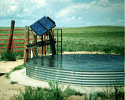
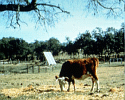
Farms solar systems
Check our Water Pumps Systems
12 Volts
Solar Powered Fence Charger -->>
Environmental:
We take environments issues seriously. Our
Environmental calls for ever greater efforts to resolve and prevent
ecological problems. We can coexist in harmony with our planet and the
Universe that surrounds us.
Green Committees: We are working to turn
environmental plans into concrete action.
Solar cells capture the sun's energy and change it to electricity. Inside
a solar panel, each cell contains silicon, an element found in sand that
absorbs sunlight. The energy in this absorbed light produces a small
electrical current. Metal grids around the solar cells direct the currents
into wires that lead to the power controls.
The
solar array is comprised of one or more solar PV modules (solar panels)
which convert sunlight into clean solar electricity. PV is short for Photo
voltaic, which means electricity from light. The solar modules need to be
mounted facing the sun and avoiding shade for best results.
The
main function of a charge controller is to prevent over charging the
batteries, as well as keeping electrical storage in the batteries from
discharging to the solar modules at night.
The
batteries store the solar power generated and discharge the power as
needed. The battery bank consists of one or more solar deep-cycle type
batteries. Depending on the current and voltages for certain applications
the batteries are wired in series and/or parallel.
The
Inverter changes the DC current stored in the batteries into usable AC
current which is the most common type used by most household appliances
and lighting.
Selecting the correct size and type of wire will enhance the performance
and reliability of your system. The size of the wire must be large enough
to carry the maximum current expected without undue voltage losses.
The
appliances and devices (such as TV's, computers, lights, water pumps etc.)
that consume electrical power are called loads.
Search Our Products Database
|